
You get an invitation to a bit of a do. It could be a wedding, a christening or baptism, a birthday or retirement celebration, a garden party or a barbecue, in fact any one of a multitude of possibilities. What these and the many others have in common is the opportunity to take photographs. Photographs of people both inside and outside, besides the weather the other thing you cannot control is the amount of available light. Inside we would use a flash. I would use a separate flash attached to the hot shoe with its head angled towards the ceiling just in front of the subjects, a technique called bounced flash, where the flash is bounced off the ceiling. It virtually eliminates red eye. Modern cameras have a red eye reduction system, this fires a pre flash that has two purposes, one; to illuminate the blood vessels in the eyes, the cause of red eye, two; for the camera to establish the shutter speed and aperture setting if on full auto.
 Outside we face different challenges. It was and still is customary to place the subjects facing the sun, although there is a reason why we shouldn’t. Before I go into that let me explain a few little know facts. There are just three main eye colours for us humans, blue, green and brown. Certainly there are numerous shades of these. Eye colour is determined by the amount of melanin in the iris it’s a pigment that also influences skin and hair colour. Blue eyes are the most light sensitive, next is green around the mid point, and finally brown, the least sensitive of the three.
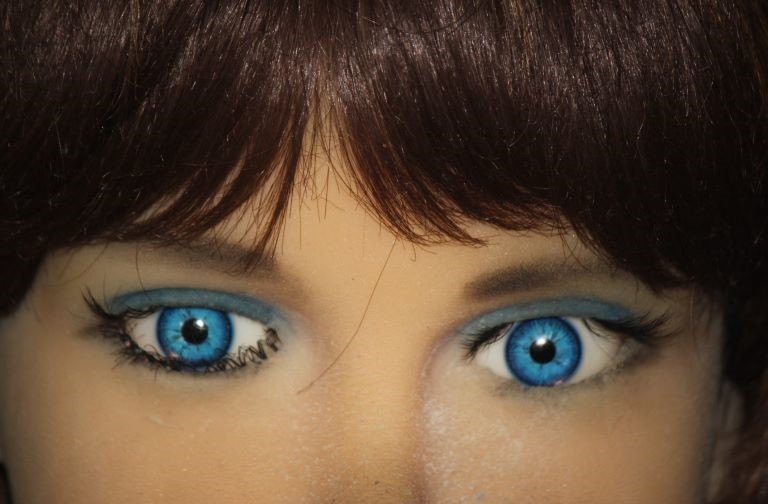
 Elina’s portrait photo cropped to show her eye make-up
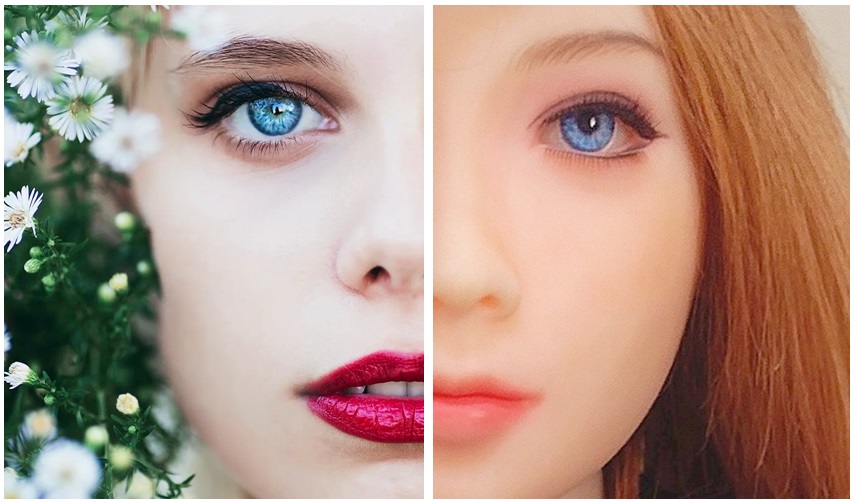
Camera: Olympus Camedia C460 5.8-17.4mmI spent a few hours considering various methods to eliminate this effect, one I kept coming back to as it was the least aggressive. I put it into practice a couple of days later. I will tell you what I did a little later. In the meantime here’s some photos I found from some doll manufacturers that illustrate the problem. Consider; if a professional photographer can make this mistake how easy it is for us to also fall foul.



 Here’s what I did and what I used. You will need to obtain a few clean soft cloths, these could be cotton (like an old shirt sleeve) stockinette (also known as ‘scrim’) or microfibre cloths, a partially used container of cream cleaner, preferably left standing for a few months or years. Method: Remove the eyes and take them to the bathroom or kitchen, wipe them over with a clean cloth, place them on a clean, dry surface. With one of the cloths put a small drop (about the size of a petite pois (very small pea)) of cream cleanser on it straight from the container without shaking it. Gently rub the cleanser over the eye in a circular motion from the centre outwards, stopping when you get to the white section. As you rub you will feel the gritty particles cutting into the surface, when it has ceased to be felt stop and rinse the eye. Leave to dry and repeat for the other eye. Once dry polish them with another clean, dry cloth. Hold each eye in turn in front of a window and look at the sheen, the sheen should be all around the eye except for the centre (iris and pupil) which should have a mattish appearance. If not repeat, if it does then refit the eyes, and have a well earned brew of your choice. The eyes are made from acrylic which is a hard wearing material although it’s surface is easily damaged, it is repairable.
This photo of Elina was taken this evening in a totally dark room using just the camera flash.
 Camera: Canon EOS 500D Settings: Shutter 1/60 Aperture 5.6The easiest way to avoid this is to have your model looking away from the camera. Here is Elina to demonstrate:

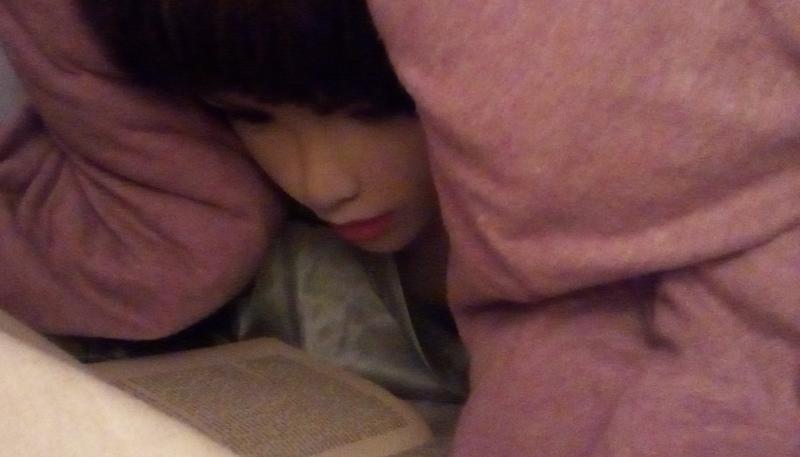 Attempting to read Lorna Doone in its original North Devonshire dialect while snuggled up in bed.Reading a book, something happening outside the window or a partially heard conversation she wants to listen to. In fact look at Elina, Rosina and Leonora very seldom do they look directly at the camera. Refer to my original post here post 4. A little about me.
Regards,
S.
Now lets look at some photos:
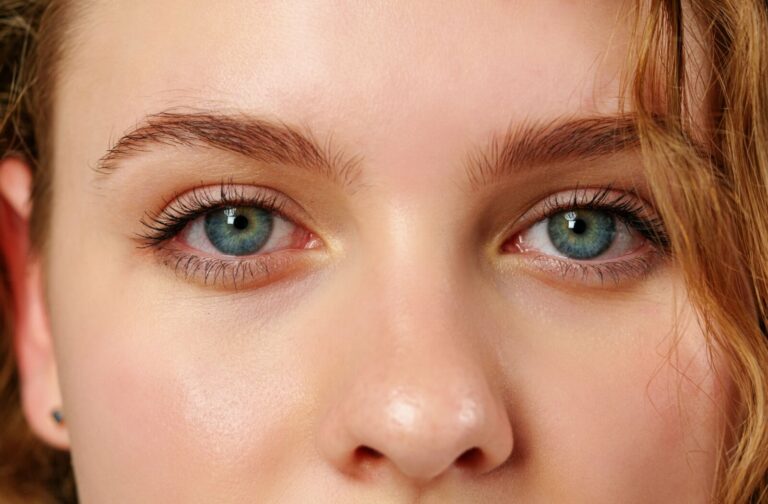 Photo from Calgary eye care via Google Images
This photo was taken inside, look at the eyes, the clarity of the colour
is plain to see as is the reflection of the light box on both eyes.
 Photo from Google Images
Taken outside, deep blue eyes.
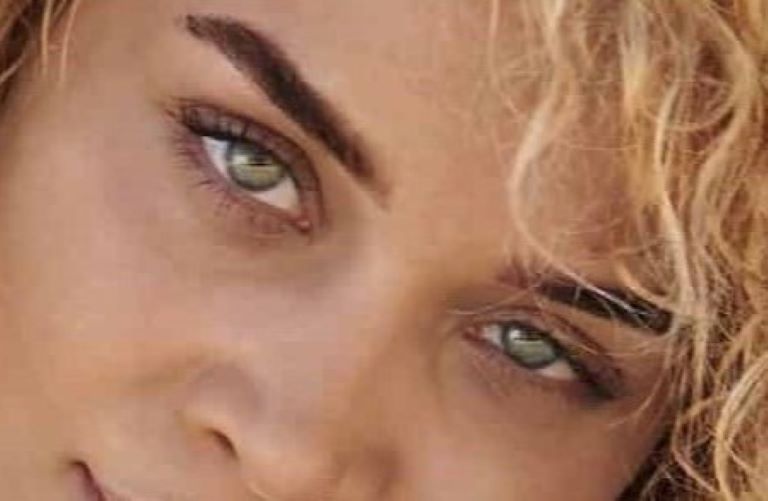 Jasmine Sanders, Sports Illustrated, Swimsuit
Issue, 2020. Cropped. Google Images.
Photographed on a beach, green eyes.
I imagine you are probably wondering what this has to do with photographing dolls? Well now I’m going to tell you. Soon after Elina arrived in May 2019 I took a portrait photo of her, when I loaded it onto the computer I was shocked with what I saw. Her deep, ocean blue eyes were blasting out of her head. It was not realistic, it was not human like.This photo was taken inside, look at the eyes, the clarity of the colour
is plain to see as is the reflection of the light box on both eyes.
Taken outside, deep blue eyes.
Issue, 2020. Cropped. Google Images.
Photographed on a beach, green eyes.
Camera: Olympus Camedia C460 5.8-17.4mm
This photo of Elina was taken this evening in a totally dark room using just the camera flash.
Regards,
S.