

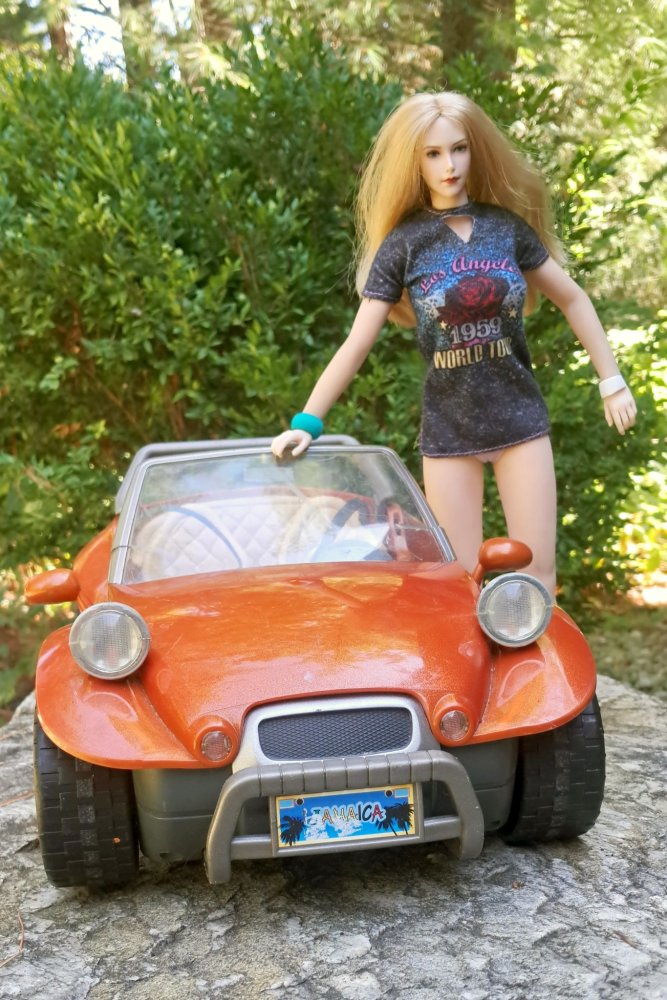
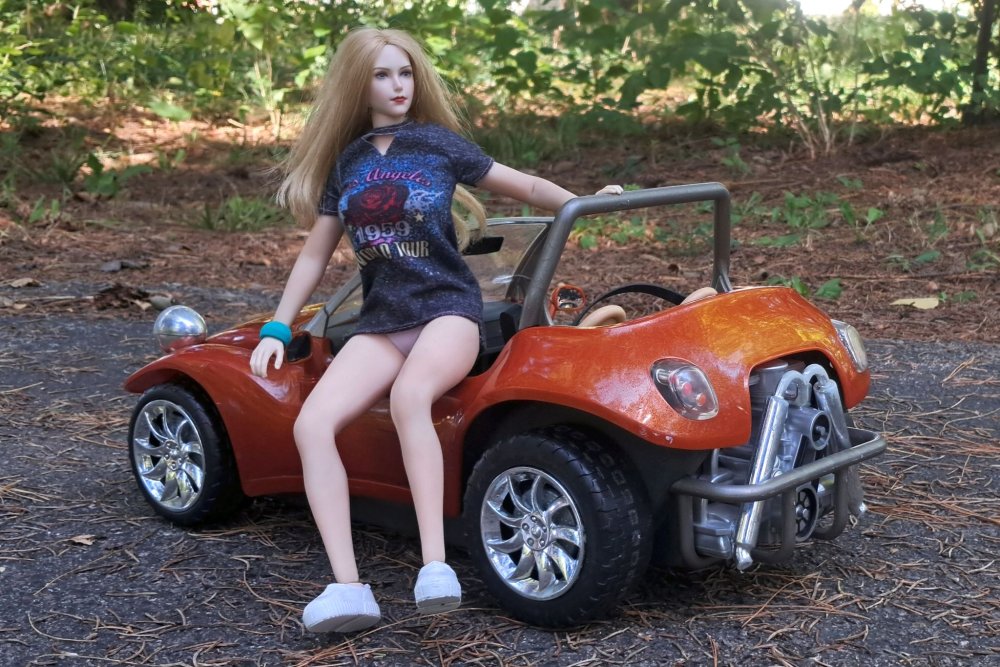
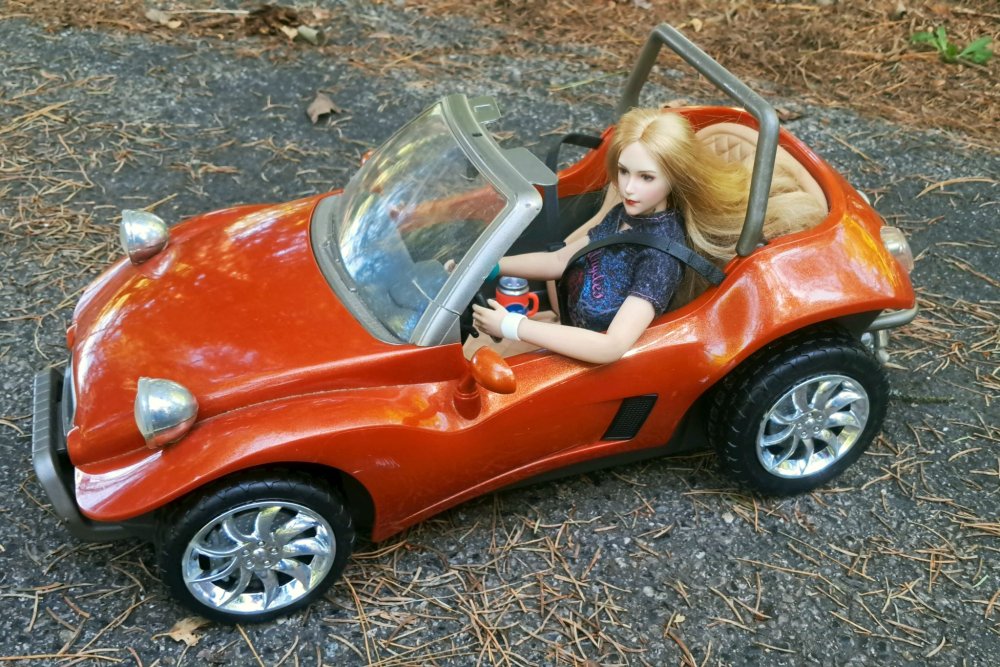
Kassie and her Meyers Manx
 .
.
.
 .
.
.
In 1964, Meyers finished his prototype, nicknamed Old Red. It was a smash hit with friends and fellow surfers, and soon Meyers launched the kit commercially.
So: short, stubby, playful, just like the Manx cat = Meyers Manx.
By the late 1960s, the Manx had become a cultural icon, symbolizing freedom, fun, and rebellion. Its image was everywhere, ads, magazines, and Hollywood.
Bruce Meyers revived the company decades later, and in the 2000s began selling updated kits. After he passed in 2021, the Meyers Manx company introduced the Meyers Manx 2.0 EV, a fully electric dune buggy.
Today, the Manx is celebrated as one of the most recognizable kit cars ever built and a cultural symbol of 1960s freedom.
✨ In short: The Meyers Manx wasn’t just a car, it was a movement. With its playful cat-inspired name, fiberglass body, and VW heart, it embodied the spirit of surf, sand, and rebellion, while leaving a tire track across pop culture that’s still visible today.
NoFA / NoAI
Kassie
.
.
🌴 Origins
In the early 1960s, Bruce F. Meyers, a California surfer, boat builder, and tinkerer, wanted a car that could capture the carefree spirit of surf culture, light, playful, and capable of handling sand dunes. Drawing on his experience with fiberglass boats, he designed a fiberglass body that could be mounted on a shortened Volkswagen Beetle chassis, using the Beetle’s air-cooled flat-four engine and running gear.In 1964, Meyers finished his prototype, nicknamed Old Red. It was a smash hit with friends and fellow surfers, and soon Meyers launched the kit commercially.
🐾 How It Got Its Name
Meyers named his buggy the “Manx” after the Manx cat from the Isle of Man:- Manx cats are known for being short-tailed or tailless, just like the shortened VW Beetle chassis used for the buggy.
- The cat’s compact, playful, and agile personality also reflected the buggy’s nature.
- The name was catchy, unique, and perfectly fit the dune buggy’s character.
So: short, stubby, playful, just like the Manx cat = Meyers Manx.
🏆 Rise to Fame
The Meyers Manx proved itself in 1967 when Meyers and friend Ted Mangels drove “Old Red” to victory in a timed run across Mexico’s Baja California peninsula, setting a record and helping spark the Baja 1000 off-road race. This cemented the buggy’s reputation as more than a toy , it was a serious off-road contender.By the late 1960s, the Manx had become a cultural icon, symbolizing freedom, fun, and rebellion. Its image was everywhere, ads, magazines, and Hollywood.
📉 Challenges & Legacy
- The design was wildly copied, hundreds of fiberglass buggy makers popped up, producing an estimated 250,000–300,000 imitations.
- Meyers tried to defend his design in court but lost, which nearly bankrupted his company.
- Only about 7,000 original Meyers Manxes were made.
Bruce Meyers revived the company decades later, and in the 2000s began selling updated kits. After he passed in 2021, the Meyers Manx company introduced the Meyers Manx 2.0 EV, a fully electric dune buggy.
Today, the Manx is celebrated as one of the most recognizable kit cars ever built and a cultural symbol of 1960s freedom.
🎉 5 Fun Facts About the Meyers Manx
- World Record: In 1967, “Old Red” (the first Manx) beat motorcycles to set the first record in the Baja 1000 race — something no car had ever done.
- Surfboard Friendly: It became the quintessential surf buggy, surfers loved its ability to hit sandy beaches where regular cars would sink.
- Kit Car Revolution: The Manx launched the fiberglass kit car boom, with countless imitations based on Beetle chassis.
- Collector’s Dream: Original, authenticated Meyers Manxes now fetch tens of thousands of dollars at auctions.
- Electric Future: The modern Manx 2.0 EV promises up to 300 miles of range, keeping the spirit alive for a new generation.
🎬 5 Appearances in Movies, TV, & Commercials
- The Thomas Crown Affair (1968): Steve McQueen drives a green Manx dune buggy on the beach, one of the most famous car chase sequences ever filmed on sand.
Kassie and her Meyers Manx. - The Man from U.N.C.L.E. (1960s TV series): featured a Manx in an episode, cementing its spy-era cool factor.
- Herbie Goes to Monte Carlo (1977): part of the Herbie VW film franchise, featuring dune buggies in racing sequences.
- Mad, Mad, Mad Monsters (1972 cartoon): parody dune buggies modeled after the Manx appeared in animation.
- 1960s/70s Car Commercials : various automotive ads featured Meyers Manxes to evoke California freedom and fun, including promotional tie-ins with tire and oil companies.
✨ In short: The Meyers Manx wasn’t just a car, it was a movement. With its playful cat-inspired name, fiberglass body, and VW heart, it embodied the spirit of surf, sand, and rebellion, while leaving a tire track across pop culture that’s still visible today.
NoFA / NoAI
Kassie