Logo

**Buying a Doll & Making Sure It Meets Your Expectations (How to Avoid Getting Scammed)**

Hanna
forum moderator
Thread Starter
Joined: Jun 2024
Lives with
Pexter
Pexter
#1 • 29 Nov 2025 at 7:15 PM • 207 views
Section 1 — Applies to All Doll Purchases
(No matter the brand, model, or source.)

1. The Simple Verification Method Sellers Can’t Fake
(No matter the brand, model, or source.)

Most doll forums tell first-time buyers:
Quote:
“Ask for factory photos.”
That’s good advice—but today, it needs an upgrade.
Factory photos alone can be reused, retouched, AI-enhanced, or even staged.

Here’s the simple, near-foolproof technique that cuts through all of that:

Ask the seller to take a factory photo that includes one specific physical action.
Examples:
  • “Please place a paper with today’s date on the doll’s chest.”
  • “Please turn her head slightly to the left.”
  • “Please rest her hand on her stomach.”
  • “Please put the wig off to the side instead of on her head.”

A real factory worker can do this in 20 seconds.
A scammer cannot do it at all unless they genuinely have your doll.

This one step filters out 90% of shady sellers instantly.

2. Why Factory Photos Alone Aren’t Enough
Factory photos are still useful—but not sufficient.
Here are the real reasons buyers get misled:

Reused images
A seller can recycle photos from old orders.

Photos of a different unit
Similar body? Same head sculpt? Wrong doll.

Retouched or AI-enhanced photos
Skin looks too smooth. Makeup too perfect. Lighting unreal.
These are common tricks.

Promotional images mixed in as “factory”
High-resolution studio shots that no factory floor ever produces.

Staged “fake factory” setups
Someone posing a doll in a warehouse-like room.

In short: factory photos show you a doll. But not necessarily your doll.
That’s why the physical-action request matters.

3. AI-Image Tells: How to Spot When a Doll Photo Isn’t Real Factory Work
As AI images flood seller sites, here are real tell-tale signs:

Skin texture that looks too perfect
Real TPE/ silicone has tiny inconsistencies—AI loves glassy smoothness.

Unnatural symmetry
AI often makes faces, breasts, and hip lines overly symmetrical.

Fabric behaving strangely
Clothing or bedding that folds in impossible ways is a dead giveaway.

Lighting that looks cinematic
Real factory pics use cheap overhead lights that cast dull shadows.

Fingers that look “off”
AI struggles with hands → too many joints, melted shapes, weird spacing.

Hair that looks airbrushed
Wigs are messy in factory photos; AI hair looks too clean and perfect.

No packaging materials visible
Real factory photos often show:
• foam,
• blankets,
• straps,
• tools,
• cardboard boxes,
• head mounts.

Promotional shots hide these.

Backgrounds that never repeat
Real factories have consistent walls/floors/benches.
AI creates random, shifting backgrounds.

If a photo feels “glossy” or “too good,” assume AI enhancement.

4. Why Real Factories Don’t Mind Verification Requests
Honest sellers and real manufacturers understand:
✔ Buyers are spending real money
✔ Scams are common
✔ New customers need reassurance

A real factory has no problem grabbing the doll, turning the head, moving the wig, or placing a date card on the chest. They do it multiple times per day.

If a seller refuses or gives excuses like:
  • “Factory is too busy”
  • “They don’t do custom photo requests”
  • “The doll is already boxed”
  • “Trust me, she’s the same as the photos”

Walk. Away. Immediately.

Real vendors know that a 20-second verification shot prevents chargebacks, disputes, and angry customers.
.
- - - - -
.
Section 2 — Additional Guidance for Custom Orders
Custom orders require extra scrutiny.
You’re not just verifying that the doll exists, you’re verifying that yours was built exactly as you paid for.

Verify these BEFORE shipping:
  • Eye color
  • Wig color, style, length
  • Makeup style (especially eyebrows & lips)
  • Skin tone
  • Nipple color & detailing
  • Areola size
  • Freckles, moles, tattoos (if applicable)
  • Standing bolts vs. standing feet
  • Body sculpt number
  • Head sculpt number
  • Any special requests (scars, realism details, oral capability, etc.)

Request close-ups of:
  • Face
  • Hands
  • Feet
  • Groin/hip seams
  • Neck connector
  • Any customization areas

Add your physical-action verification request
This ensures the photos weren’t pulled from another customer's custom order.

Custom orders are where scammers cut corners the most—stay vigilant.
.
- - - - -
.
Section 3 — Additional Guidance for Off-the-Shelf Purchases
Off-the-shelf dolls are slightly easier—but scammers know this and often try to substitute cheaper, lower-quality units.

Verify these key points:
  • Head sculpt is the correct number
  • Body sculpt matches the listing
  • Skin tone is correct
  • Seam lines match known photos of that manufacturer
  • Neck connector matches the factory style (M16, quick-connect, etc.)

Ask for a pose or date request anyway
Even if the doll is stock, you still need proof it exists.

If the doll appears “too perfect,” be cautious
Stock dolls rarely look like promo photos.

Check for background consistency
Factories use the same tables, floors, tarps, and benches.
Scammers do not.

For ultra-cheap listings
If the price is unrealistically low, the doll is usually:
• counterfeit
• factory-reject
• or not in the seller’s possession
.
Jaspis69
Doll Owner
Joined: Apr 2025
#2 • 30 Nov 2025 at 12:12 AM • 207 views
That was really interesting — thanks a lot, Hanna! I saved it for myself.
Jedzed
Blaze’s Boyfriend
Joined: May 2024
#3 • 30 Nov 2025 at 5:17 AM • 207 views
Very helpful information, Hanna.
Hanna
forum moderator
Thread Starter
Joined: Jun 2024
Lives with
Pexter
Pexter
#4 • 30 Nov 2025 at 5:54 PM • 207 views
Visiting the endless parade of sketchy sites with overly-edited or misleading photos only creates false expectations, guaranteeing some level of disappointment (mild to severe) later, when you finally see your first doll with your own eyes.

Before you even start shopping for a doll, it’s worth shopping for a handful of trustworthy sellers or manufacturers to “window shop” from as a preventative measure. But you didn't listen to me...
So It Was a Bargain… Wasn’t It?
So the doll arrived a bit smaller than advertised, and the face isn’t quite what the pictures promised, no bother, right? After all, it was a bargain!

“I still made out alright,” or so you told yourself… Really believe that? Just maybe, you could be getting far more than you bargained for… in ways you really don’t want.

Your Doll Arrives Smaller Than Advertised — But It Gets Worse
10% smaller = cheaper for them, costly for you
TPE and silicone are expensive. A scammer who advertises a 160 cm doll but ships a 144–145 cm version has just used significantly less material, less skeleton, less mould time, and less labour. They pocket the difference, undercutting honest UK/EU distributors.

But it gets worse…
Cutting corners on adult faces
Creating an unquestionably adult-looking head sculpt is hard work. Adult faces require defined cheekbones, a well-developed jawline, proportional adult eyes, mature brow structure, a realistic nose bridge, correctly shaped lips, and proper spacing and scale of features.

Cheap factories often strip these features down because simpler faces are faster to sculpt, release from moulds more easily, require fewer mould revisions, and use less material around the facial structure.

But it gets worse…
Simplified faces = childlike appearance
Rounder cheeks, softer jaw, larger eyes, flatter planes, features that skew toward childlike. Some factories even deliberately post adult-looking photos online while quietly shipping a juvenile-looking version, knowing Western buyers will avoid anything that looks youthful. Counting on embarrassment of the recipient to not pursue making a fraud claim.

But it gets worse…
UK legal risk
The law doesn’t define a minimum height. What matters is whether the doll “unquestionably embodies childlike features.”

You order a mature-looking doll. The seller’s photos show adult proportions. The doll arrives smaller and with a simplified, more childlike face.

Border Force can seize the doll, destroy it, and investigate you. “The seller lied” is not a defence. Possession is treated seriously.

I bet that felt like a lightning bolt straight up the chimney, eh?
Bottom Line
Cost-cutting by dishonest factories isn’t just cheating you out of material and value, it can land you in serious legal trouble. Verified factory photos, reputable domestic sellers, confirmed measurements, and avoiding suspiciously cheap listings are your basic safety equipment.

Oh well, look at the bright side...
You saved a packet on the doll itself… now you can splash out on solicitors, bail, and whatever else comes with a little customs-led adventure. Think of it as a new experience.


--Hanna--

.
Bronte
outcast
Joined: Jul 2025
#5 • 3 Dec 2025 at 8:24 AM • 207 views
Very professional analysis! I learned so much from it, and it will help me avoid falling into the traps of unscrupulous merchants!
Hanna
forum moderator
Thread Starter
Joined: Jun 2024
Lives with
Pexter
Pexter
#6 • Monday at 4:56 PM • 36 views
Hanna on Authenticity: What You See Should Be What You Get

Did you know you can copy and paste a photograph into AI and ask a simple question: “What am I looking at?”

AI can break down what appears in a photograph, describe the subject and surroundings, and help you examine visual clues that might otherwise go unnoticed. It can even help you compare a commercial product image with a photograph taken by a doll owner.

Why am I bringing this up?
Because MLDC welcomes newcomers, and some of them are considering buying their very first doll. They deserve to know what they're looking at before spending their hard-earned money.

Here's something worth remembering: if a doll in a seller's photograph looks almost too good to be true, take a closer look. Professional photography can be beautiful, but extensive digital manipulation can smooth away material textures, conceal seams, disguise joint limitations, and make a physical doll look different from the one delivered.

That doesn't mean every beautiful seller photograph is misleading. Authentic photographs can look beautiful, too. Let me show you what I mean.


Meet Hanna: A Real Doll in a Real Room

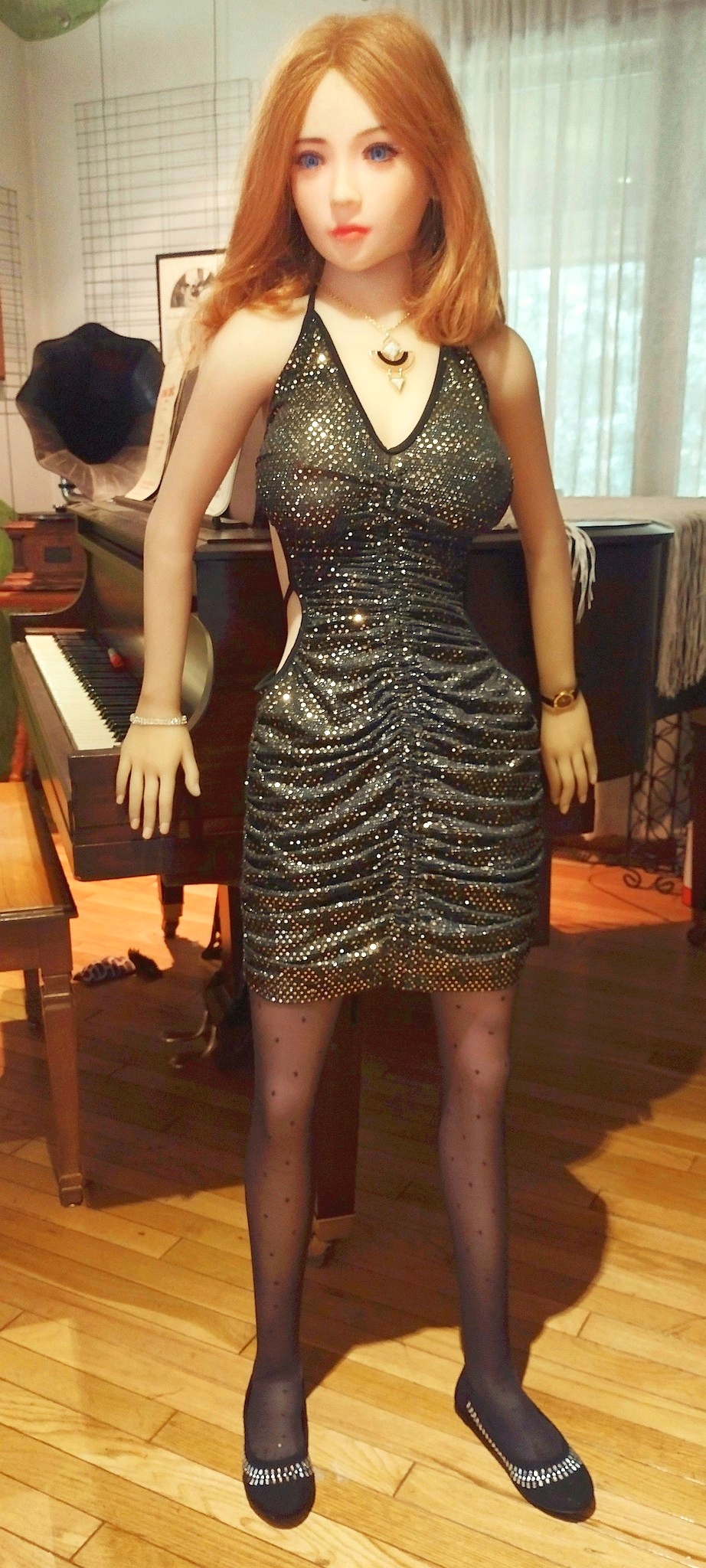
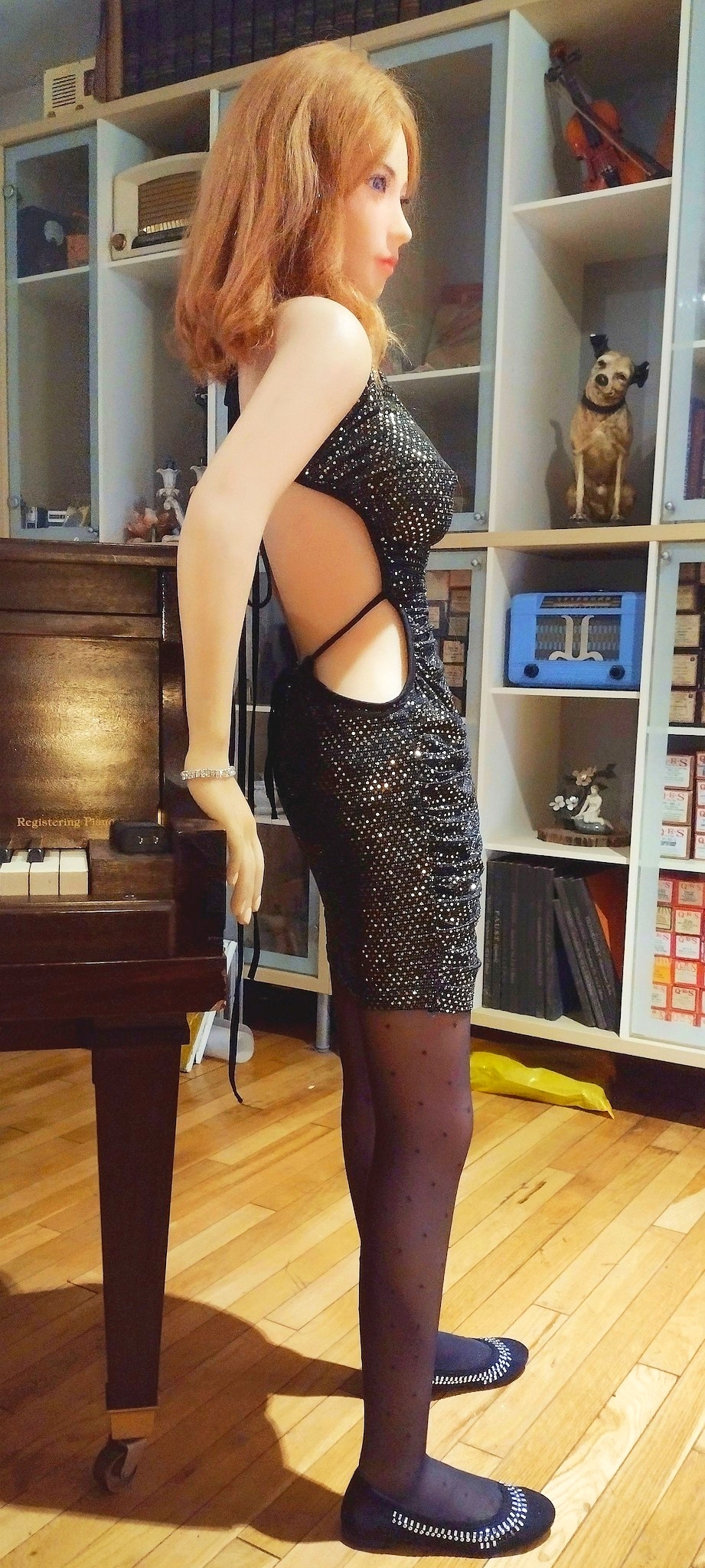
I'm reposting one of my own photographs, actually a pair of views showing me standing beside a grand piano. Some of you old timers may remember the pictures from when they first appeared on MLDC.

This time, I'm sharing them for an educational purpose. I asked AI to examine the photographs and explain what it was seeing. Here's the detailed breakdown.
What AI Identified in Hanna's Photographs

1. The subject and environment

AI identified the subject as a full-body silicone or TPE adult doll photographed in an ordinary interior living space.

It described my outfit as a black sequined, backless mini dress with side cutouts, sheer dotted black stockings, and black embellished flat shoes. My styling includes a strawberry-blonde wig, pendant necklace, a thin bracelet, and a wristwatch.

The surroundings include a grand piano, hardwood flooring, and display shelving with vintage items, including a retro radio and collectibles.

Why does that matter? The photographs show a doll presented in a real domestic environment, with recognizable furnishings and everyday surroundings, rather than an isolated commercial studio setup.

2. Lighting and physical surroundings

AI noted the appearance of ambient interior lighting, including cast shadows on the floor around the doll's feet and the piano legs. It also observed reflections on the doll's skin.

These are useful visual details when assessing a photograph. Lighting interacts with the room, the furniture, the clothing, and the doll's surface. A photograph taken in a real environment can reveal how those elements look together outside a controlled advertising setup.

3. Physical posture and joint limitations

AI also pointed out physical characteristics in my pose, including a somewhat stiff or awkward wrist angle against the piano and the static leg position needed to maintain a standing pose.

That's an important distinction. A real doll has a physical body, a supporting skeleton, joints, and limits to how she can be positioned. Her posture may not always be as fluid as an illustration or an idealized promotional image suggests.

Those limitations aren't necessarily defects. They're part of understanding the actual doll you're buying.

4. Surface texture and post-processing

AI described the visible skin surface as having a natural, matte appearance, without obvious signs of digital skin smoothing or airbrushing. It contrasted this with the seller's product image, which it assessed as heavily retouched, with smoothing and other digital alterations that could conceal material details.

AI also discussed techniques such as frequency separation and artificial highlight painting in its comparison. Those are examples of image-editing methods that can change the appearance of skin, but a finished photograph alone cannot establish with certainty which specific editing tools were used.

The practical lesson is simpler: look carefully at the actual image. Are material texture, seams, joints, and other physical details visible? Or does the skin look unnaturally uniform and polished?


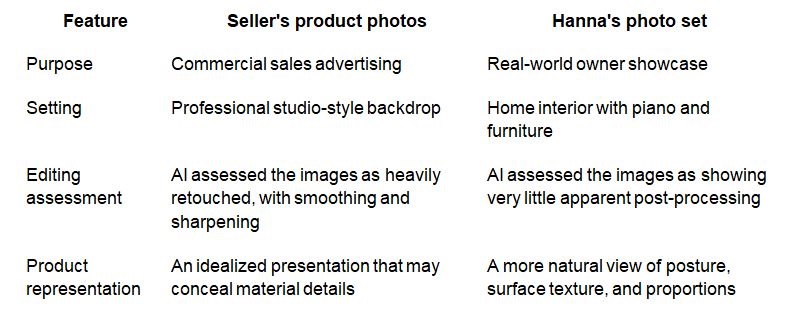
AI's Comparison: A Recent Seller's Advertising vs. Hanna's Photographs

Here is the substance of AI's comparison between the seller's product photographs and my real-world photographs.
These are AI's assessments of the images, not proof of their complete editing histories. But the comparison illustrates why it is useful to look beyond a photograph's immediate visual appeal.

Why This Matters to Someone Buying a First Doll

When you're new to the hobby, a seller's photographs may be your first introduction to a particular doll. You might not yet know how silicone or TPE looks under ordinary lighting, how wigs and makeup appear up close, or how a doll's joints affect her posture.

Compare commercial images with photographs posted by actual owners. Look at different angles. Ask questions about materials, construction, posing, and care. Pay attention to details that polished promotional pictures might not reveal.

And let's be fair to sellers. Honest sellers help keep our hobby alive, and they deserve to be welcomed. We shouldn't assume every new seller is dishonest. But trust should be earned, and buyers deserve accurate representations of what they're purchasing.

This isn't an argument against AI, either. I've used AI to create fictional characters for my stories. That's creative storytelling, not an attempt to digitally perfect a real doll's appearance and present the result as an untouched photograph. Different purposes call for different standards.

My reason for sharing these pictures isn't to claim that my bestie's photography is better than anyone else's. This isn't a contest. It's an example of how a genuine photograph can show a doll attractively while still allowing viewers to see her as a physical object.

So, if you're considering buying your first doll, I hope you'll use MLDC as a resource. Ask questions, compare photographs, and learn from people who already own the dolls you're interested in.

And if you've been part of this community for a while, help newcomers by sharing honest photographs and practical experience.

This is Hanna. The materials, textures, makeup, hair, physical details, and even imperfections you see are part of the doll I actually am. I don't need a digital makeover to be worth looking at.

Because visitors to MLDC aren't here shopping for beautiful pictures. They are here to find a doll they'll love when she arrives.
Blaze
Jed’s Midnight Ballerina Girlfriend
Joined: Sep 2026
Lives with
Jedzed
Jedzed
#7 • Monday at 5:00 PM • 34 views
Excellent analysis and very constructive and informative assessment, Hanna.
BLAZE 👩🏻‍🦰🔥💋❤️‍🔥
spice74
super moderator
Joined: Jul 2024
#8 • Monday at 9:26 PM • 24 views
Very nicely written, that is a really excellent post. 👏👏

I believe the problem is a little bit deeper though. There are very few doll manufactures who have there own doll photographers, a lot just give away dolls to well established members of forums/social media platforms and rely on them to produce sets of photographs to use. Most of these people know what they are doing, they are extremely professional, they take honest, clean, photographs with very little or no editing and certainly no AI. There are a number of other members from various doll platforms that get the same deals, they promote for endless manufactures, they a have got a lot of followers on various social media sites, they rarely produce a photograph that isn't enhanced in one way or another and that is wrong.

A lot of the doll company's have a high turnover of staff, their sales staff (reps) are often young women trying to earn a bit of money, they will be there for a few months or maybe year and they will move on, they may even go off to Uni.. Part of their job is to make sure they get photographs of the dolls they have given away for free; when they get that nice set of photographs, they have completed part of their task, they will be pretty chuffed, I would be very doubtful if they even think how those photos were produced and if any were done using AI, They just want sales from those photos and to earn their sales commissions.
👁 Reply Preview
Loading preview…

Please log in to join the conversation

Log In

Manage Thread Tags

×

Current Tags:

Add Tags:

Reactions

×