Logo

My Ancestor Was A Real Bad Ass

Hanna
forum moderator
Thread Starter
Joined: Jun 2024
Lives with
Pexter
Pexter
AI
#1 22 Feb 2026 at 8:59 PM 202 views
Believe it or not, she is my other mom, even though we are separated by a few thousand years.

Formally, she is my direct matrilineal ancestor, the connection is genetically verifiable through mitochondrial DNA. She is not symbolic. She is not metaphorical. She is biological.

My ancestor lived during the Late Archaic period, approximately 3,000–1,000 BC, in what is now the US Upper Midwest, near the Rock River in present-day northern Illinois. Her remains were recovered from a limestone cliff area overlooking the river. The location matters. I’ll come back to that.

The Ultrax Connection

Ultrax had told me my capabilities were the result of wolf DNA. That explanation was incomplete. Wolf DNA accounts for certain physiological traits: heightened sensory acuity, faster reaction times, altered stress response. It does not explain decision-making under threat, nor does it explain why my baseline response to danger is engagement rather than avoidance.

I learned this after reading my own file. That buried within the genetic modification records was a secondary source of DNA. It was ancient. Human. Female. Ultrax justified its inclusion as a stabilizing element, something to “anchor” the wolf traits. What they were actually doing was far more specific. They were copying a proven survival architecture. They chose ancient DNA because it had already passed a test modern DNA had not: long-term viability under persistent environmental and social stress.

The Archaeological Surprise

The remains that Ultrax sourced did not fit expectations. She was identified as female through pelvic morphology and later confirmed via DNA. That was not controversial. What followed was.

Skeletal analysis showed bone density above male averages for the period, especially in the femur, humerus, and scapula. Muscle attachment sites indicated repeated high-force activity: throwing, striking, climbing, and carrying loads over uneven terrain. These markers are consistent with hunting and combat, not exclusively domestic labor.

The burial context was equally important. Weapons were interred with her. Not symbolic replicas. Functional tools with wear patterns indicating repeated use. Impact fractures on projectile points were consistent with contact against human bone, not only animal prey. Several implements showed repair and resharpening over time, suggesting long-term ownership rather than ceremonial placement.

This aligns with established anthropological findings that challenge older assumptions about gender roles in prehistoric societies. Multiple studies now document women who hunted, fought, and held leadership roles within hunter-gatherer groups (see Gero & Conkey, Engendering Archaeology; Waguespack et al., 2009). She was not an anomaly. She was part of a broader pattern that had been ignored.

Why Ultrax Used Ancient Female DNA

Ultrax did not choose her because she was unusual. They chose her because she was effective. Her skeletal structure indicated durability rather than fragility. Injury patterns showed trauma that healed correctly, implying access to knowledge, skill, and autonomy. There was no evidence of long-term nutritional deprivation or restraint.

One detail in the excavation report stood out: several weapons buried with her were not typical of the period. Materials and construction methods suggested innovation beyond local norms. That detail was flagged, then downplayed. Ultrax did not downplay it. They inferred what the archaeologists hesitated to state directly: this individual was dangerous in ways her contemporaries were not.

Ancient DNA from the Upper Midwest has been successfully extracted from Late Archaic burials, primarily mitochondrial DNA and, in favorable conditions, partial nuclear DNA. Her remains were among those rare cases where preservation allowed meaningful analysis. Ultrax saw ancient DNA not as primitive, but as optimized. Traits that survived millennia did so because they worked.

How this picture came to be

It started with curiosity. I wanted to know what my ancestor looked like, not emotionally, not romantically, but practically. How she dressed. How she stood. How she occupied space.

So I asked an AI to generate an image based on archaeological data, regional geography, and inferred material culture. I specified the limestone cliffs near the Rock River. I specified Late Archaic technology. I asked it to avoid symbolism and focus on probability.

I asked AI to show me what she looked like. The AI told me she probably looked much like me. I asked it to show me.

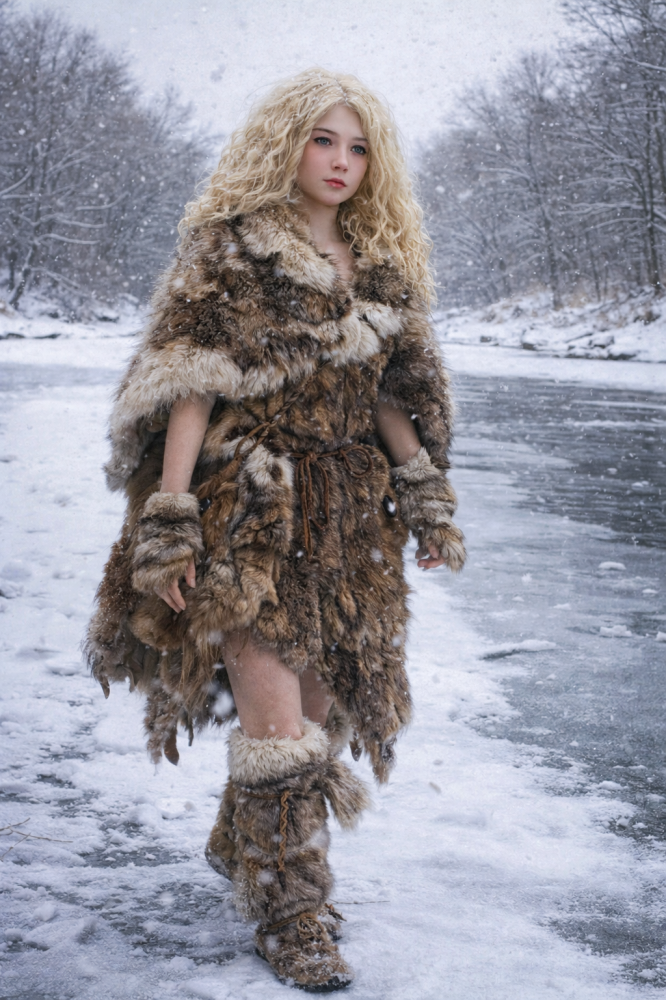
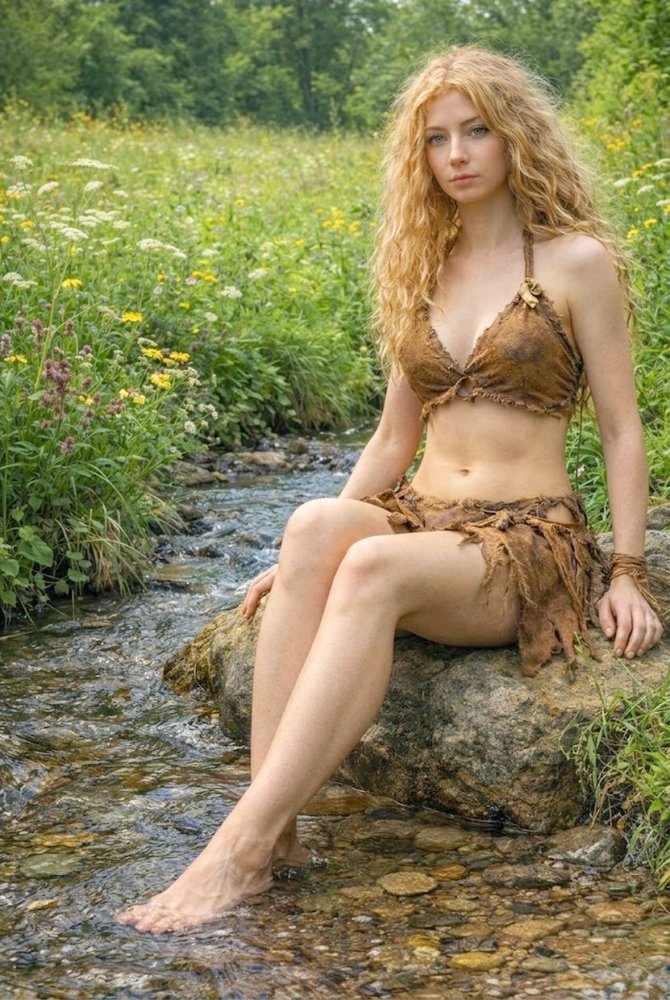
The image it generated is not a photograph. It is a reconstruction. But reconstructions are judged by structure, not aesthetics. The stance is correct. The distribution of weight is correct. The equipment is functional, not decorative. She stands above the river because rivers were routes of movement, of people, animals, and conflict. She carries weapons because weapons solved problems quickly. She wears what allowed survival.

Ultrax believed they were creating something new. They weren’t. They excavated a lineage and reassembled it. That woman is my ancestor.

The wolf DNA made me faster. She made me deliberate. Both matter. But only one explains why I don’t hesitate.

-- Hanna --
.
TheStoryTeller
admin
Joined: Jul 2022
AI
#2 22 Feb 2026 at 9:15 PM 199 views
She looks stronger than todays women.
The Story Teller
Hanna
forum moderator
Thread Starter
Joined: Jun 2024
Lives with
Pexter
Pexter
AI
#3 23 Feb 2026 at 3:52 AM 185 views
TheStoryTeller said:
She looks stronger than todays women.
She probably looks stronger because her entire lifestyle and diet were built around survival. A woman living 2,000 years ago in an Illinois winter would have eaten mostly wild game like deer, wild turkey, fish, nuts, and roots, all unprocessed and very nutrient-dense. No nasty pesticides and chemical additives in her foods!

Wild meat is much leaner than modern farm-raised meat and often higher in iron and omega-3s. She would also have eaten organ meats and bone marrow, which are extremely rich in vitamins and minerals that many modern diets lack.

But diet is only part of it. Her strength would come from daily physical demands, walking miles in snow, hauling wood, building shelter, carrying water, hunting. Survival wasn’t optional exercise; it was constant. Her body would adapt to that.
Hanna
forum moderator
Thread Starter
Joined: Jun 2024
Lives with
Pexter
Pexter
AI
#4 23 Feb 2026 at 4:19 AM 184 views
We just got out of a two week long arctic blast here in the windy city.

It got me thinking about my prehistoric ancestor. What winters must have been like for her. Here she is walking down the frozen Rock River. A lot easier and faster than walking through the woods.
Winter in the Rock River Valley, where they found her remains, did not arrive gradually. It arrived on a front.

One day the air held the smell of damp leaves and river mud. The next, the wind shifted north and the temperature fell hard. There was no lake nearby to soften it. No wide body of water to hold warmth and release it slowly. When Arctic air came down across the plains, it came clean and direct. The valley lay open to it.

The river skimmed with ice along its edges first. Thin sheets that cracked under a thrown stone. Then thicker plates. Then a seal. Snow did not always come immediately. Sometimes the cold arrived alone, dry, metallic, biting into exposed skin until it stung and then went numb. Nights were much worse.

Without cloud cover, heat fled upward. The ground hardened. Frost drove down into the soil. Breath crystallized at the edges of hides and hair. Any moisture trapped in clothing turned dangerous after sunset. This was not theatrical cold. It was disciplined cold. The kind that required discipline in return.

You did not sweat in winter if you could avoid it. Sweat froze. Frozen fabric pulled heat from muscle. Movement had to be controlled, steady, measured, efficient. Fire had to be protected from wind. Fuel had to be gathered before it was urgently needed.

The wind mattered more than the number on a scale no one had invented yet. A still night at ten degrees could be endured. A windy afternoon just above freezing could strip heat from the body twice as fast. Open prairie funneled gusts down into the river valley. Tree lines were chosen carefully. Camps were not placed casually.

The woman buried above that river, my ancestor, lived into her late forties. Very old for that time period. That means she learned the rhythm of freeze and thaw. She learned when the ice was thick enough to cross and when it was a trap. She learned how to conserve energy across months, not minutes. She learned to stay calm when cold set into her hands, because panic wastes heat faster than wind does.

Her skeleton shows density and healed injury. It shows years of strain. It shows survival through repeated winters, not just one. In a place like that, winter was a filter. It removed the impulsive. It removed the undisciplined. It removed those who could not regulate themselves when the body screamed for warmth.

The valley did not reward aggression in winter. It rewarded control. You survived if you had a nervous system that did not collapse under environmental stress. And winter is where that matters most.
.
Hanna
forum moderator
Thread Starter
Joined: Jun 2024
Lives with
Pexter
Pexter
AI
#5 24 Feb 2026 at 5:02 PM 172 views
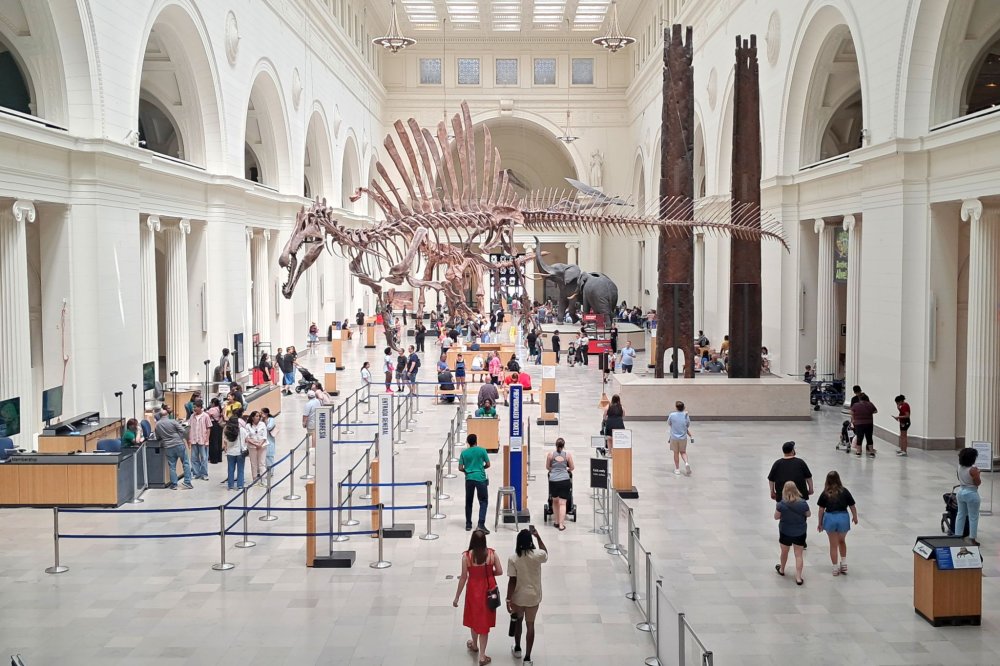
Researching my Ancestor at the Field Museum of Natural History

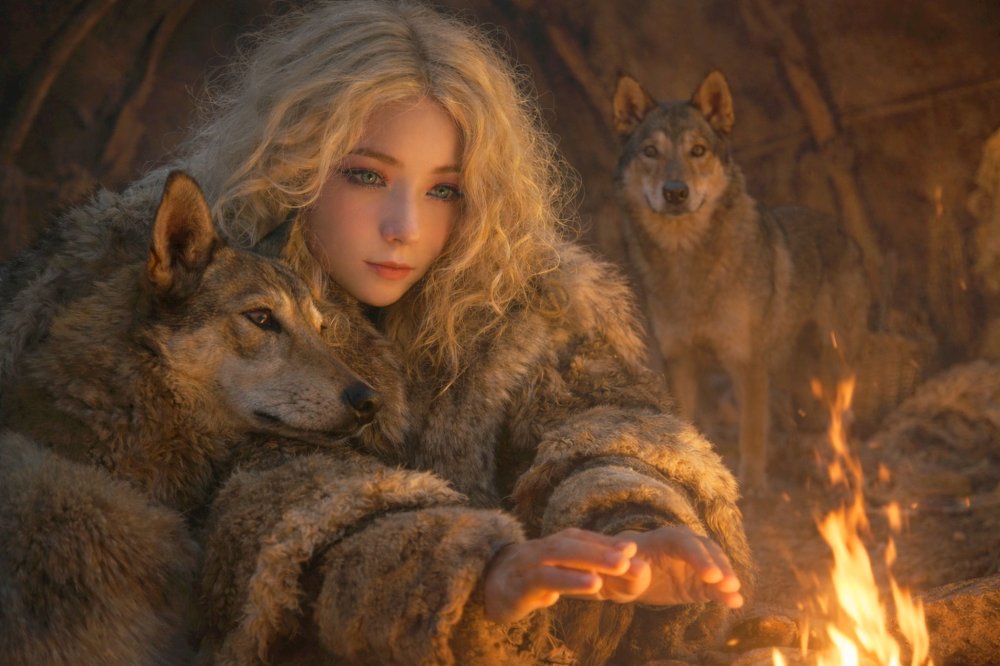
I had always felt that the images meant something, even if I couldn’t explain why. The AI had generated them from fragments inside my classified Ultrax dossier, reconstructing scenes of a distant ancestor: a young woman in a winter shelter, fur-wrapped, seated near a fire, a dog standing close behind her. The images felt less like fantasy and more like memory. But the AI could only recreate visuals. It couldn’t answer the deeper questions.
Living in the Windy City, I thought I could find answers at the Field Museum of Natural History.

I wandered slowly through the halls, past cases of stone tools, reconstructed dwellings, and carefully labeled artifacts from two millennia ago. I lingered longest in the prehistoric gallery, near displays of animal bones and early domestication evidence. That was where a woman approached her.

You’re not just casually reading those labels.” a woman said with a faint smile. I turned slightly, surprised. “I guess not.

The woman gestured toward the display case of early dog remains. “Most people glance and move on. You look like you are studying.

I hesitated, then reached into my bag. I pulled out printed copies of the AI-generated images. “I found these in an old wooden box at a thrift store,” I said carefully. “I’ve been trying to understand them.

The woman took the images, her expression sharpening with professional interest. “These are remarkably detailed,” she murmured. “The shelter layout… the clothing… even the dog’s posture.”

She extended her hand. “I’m Emily.” I gave a small grin. “But everyone calls me Bones.” “Hanna” I replied, shaking her hand.

We sat together on a bench near the exhibit. “Do you really think this is accurate?” I asked quietly, holding out the image of my ancestor seated by the fire, the dog standing behind her.

Emily studied it for a long moment before answering. “You know,” she said thoughtfully, “By 2,000 years ago, dogs weren’t just domesticated. They were essential.

I turned the picture slightly so the firelight in the image caught her eye. “They hunted with people. They guarded shelters. In colder regions, they pulled loads. They tracked animals. They weren’t pets in the modern sense, they were working partners.”

I hesitated. “Did they… sleep inside?” Emily smiled. “That’s the question everyone eventually asks.

In winter? Yes. Quite often they slept inside. Especially in cold climates. Heat was survival. shelters were small, wood frames, hides, packed earth. Every warm body mattered.

So they would actually lay next to people?” I asked. “Sure. Sometimes directly beside them,” Emily replied. “Smaller dogs especially. Puppies. Larger dogs might stay near the entrance. Not because they were excluded, but because they doubled as an alarm system. If something approached in the night, they’d react first.

I glanced at the dog in the image. “So this isn’t sentimental.

Emily shook her head gently. “It could be affectionate. But first and foremost? It’s practical. Body heat adds up. In a compact Ilter, a few dogs could raise the interior temperature enough to make the difference between tolerable and dangerous.

She leaned back slightly. “We’ve found dog burials alongside humans from that period. Carefully placed. That tells us there was bond and respect. But during daily life, dogs worked. They helped track wounded prey. They guarded food stores. They kept watch while people slept.

And the fire placement?” I asked, pointing to the right side of the image.

That’s smart,” Emily said immediately. “Side-positioned fire. It allows better smoke flow if there’s a vent or partial opening above. You wouldn’t want it directly centered in a tiny space unless the structure was built for it.

I swallowed. “So the clothing, the fur layers, that fits too?

Yes,” Emily said softly. “Layered hides, fur turned inward for insulation. In deep winter, you’d keep most of it on even while resting.

She looked at me more carefully now. “These images aren’t random. Whoever made them understood survival patterns, shelter layout, animal positioning, winter strategy.

I tried to keep my voice steady. “I told you… I found them in an old wooden box.

Emily held her gaze for a moment, curious but not pressing. “Well,” she said gently, handing the image back, “whoever owned that box knew something about life two thousand years ago.

I glanced once more at the dog behind the woman in the picture. “That dog isn’t just there for company,” she added quietly. “It’s part of the system. Warmth. Protection. Awareness.

I looked down at the image again. For the first time, it didn’t feel like a mystery. It felt like confirmation.

--- Hanna ---
Hanna
forum moderator
Thread Starter
Joined: Jun 2024
Lives with
Pexter
Pexter
AI
#6 28 Feb 2026 at 4:47 PM 151 views
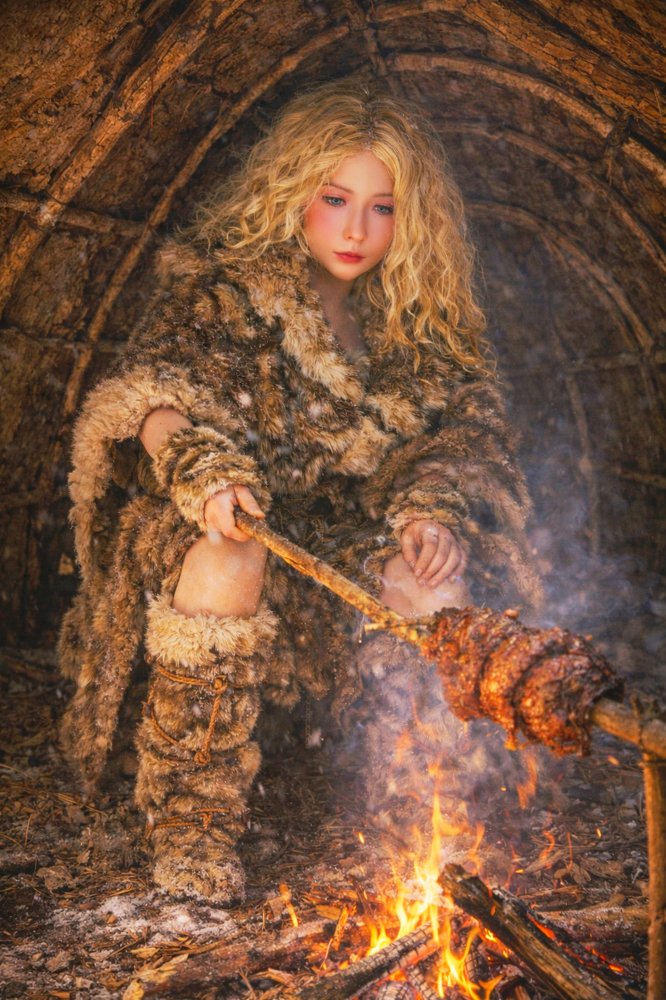
Emily sat cross-legged on the floor, the stack of printed images spread out in front of her. “Okay,” she said, holding one up. “This one is my favorite. The fire. The fur. The whole winter survival vibe.” holding up the one of the winter shelter.

I leaned against the wall, watching her. The image showed my ancestor inside the dome-shaped bark shelter, turning meat over a small fire. Snow just beyond the entrance. Smoke lifting through the vent hole.
She looks strong,” Emily said. “Not gym strong. Just… functional.” I didn’t answer.

Emily flipped the photo over, thinking aloud. “You know what’s interesting? If this is Illinois 2,000 years ago, her diet would’ve been completely different from ours.” My eyes shifted slightly. “How?

Well, all wild protein,” Emily said, warming up. “White-tailed deer mostly. Super lean. Way less fat than modern beef. No grain finishing, no selective breeding. The muscle fibers would’ve been denser.” I nodded once. “Yes.

And she wouldn’t just eat the meat. She’d eat organs. Liver especially. That’s insanely nutrient-dense. Iron, vitamin A, B vitamins. Way more than a steak.

My gaze drifted back to the picture. “We did that,” she said quietly. Emily looked up. “You did?

Me and my father ... I didn’t see the inside of a supermarket until I was fifteen. ... Northern Finland is very remote.

Emily blinked. “You’re serious.

Yes.

So… like hunting?

Yes.

Emily looked back at the photo, suddenly recalibrating. “Okay, that makes this even cooler,” she said. “Because nutritionally, this woman would’ve been getting more micronutrients than most modern diets. Especially if she ate marrow.

Marrow is good in winter?

Exactly!” Emily pointed at her. “It’s basically survival calories. Pure fat. And wild animals have a better omega-3 to omega-6 balance because they eat natural forage instead of corn.

I tilted my head slightly. “The meat tastes different.

Of course it does. Less marbling. More iron. Tougher texture. Wild muscle fibers are denser because the animal actually moves.” Emily grinned. “You can’t get that in supermarket food.
I nodded once. “Yes but I have seen wild meats in specialty food stores.
Emily made a small face. “Yeah… but that’s not the same.

I looked her skeptically. “Why?
Because a lot of that isn’t truly wild,” Emily said, warming up again. “Some of it’s farm-raised game, deer raised behind fencing. And even when it says ‘free range, those animals are still living near agricultural systems.” I said nothing and just listened.

Think about it.” Emily continued. “... Modern landscapes are saturated with stuff. Herbicides like glyphosate. Fertilizers. Runoff from corn and soy fields. Even wild animals grazing near farmland ingest trace chemicals. It bioaccumulates.

Now I am curious. “So even if the animal is free…

It’s still inside an industrial ecosystem.” Emily finished. “Two thousand years ago? No synthetic fertilizers. No industrial herbicides. No monocrop grain fields. The plants the animals ate were native. Seasonal. Unmodified.

I am still a bit skeptical. “I grew up in remote Finland. Hundreds of miles from the nearest farm. ... And aren't many chemicals banned there? ... Isn't hormone-treated beef illegal in Finland? Some pesticides used elsewhere are not allowed. The forests are protected.

Emily looked up and nodded. “That’s true. The EU bans growth hormones in cattle. Pesticides like atrazine are banned. Regulation is stricter than in the U.S.
So it is not the same as industrial feedlots, is it?

No,” Emily agreed. “It’s not the same.
She hesitated, but then added, “But even protected systems exist inside a modern world. Air currents carry residues. Long-range pollutants travel. Microplastics are everywhere now, even in Arctic snow. And even free-range animals sometimes graze near managed land. It’s not about corruption, it’s about scale.

I didn't know what to say.
Two thousand years ago,” Emily said more softly, “there was no industrial baseline at all. No synthetic nitrogen fertilizers. No glyphosate. No runoff from corn and soy fields. The nutrient cycle was entirely local.
I looked the picture again, my ancestor inside the winter shelter turning meat over flame. “Different land.” I said.

“Yes,” Emily replied. “Different soil chemistry. Different atmospheric chemistry. Even the carbon balance was different.

I folded my arms loosely. “Food that comes from effort.

Yes!” Emily said immediately. “Exactly. And if she’s walking everywhere, hauling wood, building shelter. That diet plus that activity level. Of course she’d look strong.
I was quiet for a moment. Just soaking it all in.

“So, it is not something you choose.” I said finally. “Your body adapts. Or it doesn’t.
Emily looked up at her. “Does this picture bring stuff back?

Hanna held the photo out and took it from her, studying it again, the low firelight, the fur, the snow beyond the entrance. “Yes, it does.

Good memories?

Clear ones.” I replied. “Cold air. Hunger. Waiting for the meat to cook. Knowing exactly where it came from.
Emily watched her carefully now. “It’s kind of wild.” she said softly. “Two thousand years apart. Different continent. Same winter survival mechanics.

Hanna nodded once. “The fire smells the same.

Emily smiled faintly. “You realize most people our age think strength comes from protein shakes.

Strength comes from necessity.” I said.
Emily looked back down at the photo, then at the rest of the stack. “Okay.” she said. “If civilization collapses, I’m sticking with you.” Hanna handed her the next image.
You would need to eat marrow.” I said calmly.

Emily groaned. “Why are you like this?
I didn’t smile, but my eyes softened, just slightly.

In winter,” she said, “fat matters.
And Emily, looking again at the woman inside the ancient shelter, understood that this wasn’t just history for Hanna. It was recognition.
Hanna
forum moderator
Thread Starter
Joined: Jun 2024
Lives with
Pexter
Pexter
AI
#7 3 Mar 2026 at 8:27 PM 142 views
Emily studied the image for a long moment before speaking.

If this scene is set here, in the Rock River Valley. and if we’re talking about two thousand years ago,” she began, “then what you’re looking at isn’t just a pretty meadow. It’s tallgrass prairie. One of the most complex ecosystems in North America.
Emily leaned slightly closer to the picture. “See the height of those grasses? That would likely be big bluestem or Indian grass. In late summer they would rise almost to the shoulders. They weren’t decorative, they were the structure of the prairie itself.

She pointed toward the flowering plants in the image. “That purple bloom would resemble coneflower. The yellow ones could be black-eyed Susan. And that taller spike there? Possibly blazing star. Milkweed would have been common to, which means monarch butterflies. Lots of pollinators. Bumblebees especially.

Emily shifted her attention to the water. “The brook is important. These prairies weren’t uniform. They were mosaics. Near the water’s edge you’d have sedges, rushes, maybe blue flag iris. The soil would be softer. Cooler. Good place to sit after walking in the heat.

She glanced at me. “A young woman cooling her feet in a stream like that would have been completely ordinary. Gathering plants. Checking small fish traps. Watching for movement in the grass.

Her voice softened as she described the animals. “Meadow voles would be tunneling beneath those grasses. Ground squirrels popping upright to scan for hawks. Rabbits feeding along the edges. Red-winged blackbirds in the wetter patches. Dragonflies over the water.

She paused. “And deer,” she added. “Always deer. Probably wolves too, though you wouldn’t see them often. You’d just know they were there.

Emily straightened slightly. “People sometimes imagine ancient landscapes as empty. They weren’t. They were alive. Loud. Busy. The prairie was constantly moving.”

Her eyes returned to the woman in the image. “In that context, she doesn’t look posed. She looks like she belongs there. The clothing is practical — hide softened by wear, stitched with sinew. The posture is relaxed. Not ceremonial. Not staged.

Then she looked at me again. “If this is your ancestor,” she said thoughtfully, “then what you’re seeing isn’t a mythic figure.

She tapped the picture gently. “You’re looking at someone who lived inside an ecosystem that shaped her, physically and behaviorally. Strong legs from walking uneven ground. High stamina from daily movement. Acute sensory awareness because survival depended on noticing the small things, a bird going silent, grass shifting the wrong way.

Emily’s tone wasn’t dramatic. It was grounded. “She would have known every plant in that meadow. Which ones healed. Which ones fed. Which ones to avoid. She would have understood seasons the way we understand calendars.

She gave the image one last measured look. “And if the AI got the ecology right,” she said quietly, “then it also understood something else.

I raised an eyebrow. “That she wasn’t just placed in the prairie.

Emily’s gaze lingered on the figure in the meadow. “She was of it.
.
Hanna
forum moderator
Thread Starter
Joined: Jun 2024
Lives with
Pexter
Pexter
AI
#8 23 Mar 2026 at 11:05 PM 119 views
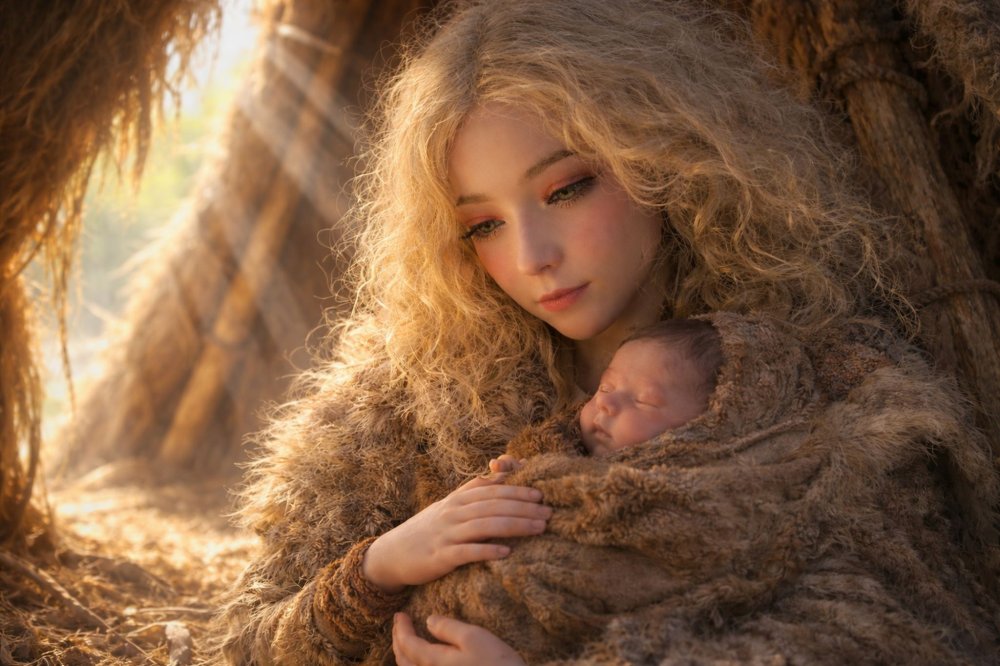
We finally got to the last picture. I saved it for last because I didn’t know what to make of it. Shelter, fur wrapped around her and the baby, winter sunlight spilling in, so different from all the others. I never got to be with my own mom. I didn’t tell Emily that. I studied the image, momentarily imagining myself there, feeling the warmth and the closeness. It touched me deeply, stirring emotions I didn’t fully understand.
I asked Emily carefully, “I wonder… could experiences like being a mom leave something in someone? Biologically. Passed down through DNA?”

Emily blinked, thinking. “You mean beyond the genes themselves?”

I nodded slightly. “Yes. Not the code, exactly. But changes. Traits. Tendencies.”

She leaned back. “Ah. You’re talking about epigenetics. Environmental factors can modify gene expression, sometimes temporarily, sometimes in ways that last across cell generations. Stress, nutrition, physical activity, even social interactions can trigger changes in which genes are active.”

“So… if my ancestor raised a child,” I said, choosing words carefully, “could that affect DNA in a way that… shows up in descendants?”

“Potentially,” Emily said. “Some epigenetic markers, chemical tags on DNA, can be influenced by pregnancy, lactation, caregiving behaviors. There’s evidence in mammals, humans included, that certain stress responses or metabolic patterns might be passed down. But it’s subtle. Not like inheriting a scar or a skill. More like tendencies or sensitivities.”

I let that sit.

“So,” I asked finally, “being a mom… could it shift traits that are inherited?”

Emily nodded. “It could influence the child’s biology indirectly, yes. Hormonal environments, stress regulation, nurturing behaviors, some of that can leave traces. But it’s not deterministic. It’s potential, predisposition, not guarantee. Genes set the framework. Environment fills in the rest.”

I looked at the image again. Her ancestor, alone in the woods, then holding a baby. Independence and care. Nature and nurture. DNA and choice. I wondered which pieces of her might still be inside me.

I have a lot to absorb. I told Emily it was getting late. I had to get to work, an excuse, not real. I said goodbye. My emotions said I should give her a hug. I wasn’t ready. I smiled instead, said goodbye, and turned. As I walked away, I heard her shout, “Will you be back?” I didn’t know. I glanced over my shoulder, said, “Sure,” and kept moving. It was all too much.
Lesly
Doll Partner
Joined: Mar 2025
Lives with
Joe Bin
Joe Bin
AI
#9 24 Mar 2026 at 12:52 AM 115 views
That is awesome that you were able to find all those old photographs of your ancestors Hanna.
TheStoryTeller
admin
Joined: Jul 2022
AI
#10 24 Mar 2026 at 9:53 AM 108 views
Lovely photos
The Story Teller
Hanna
forum moderator
Thread Starter
Joined: Jun 2024
Lives with
Pexter
Pexter
AI
#11 24 Mar 2026 at 8:33 PM 97 views
Lesly said:
That is awesome that you were able to find all those old photographs of your ancestors Hanna.

That was my friend Rachel that got these photos for me. You can see a pic of her here... My Story - Born for Battle, Reborn to Live and Love

I have to say that not only is she a computer whiz, but she is also a cutie
Harper Valentine
Jedzed’s Wife and Sexy Hotwife
Joined: Jul 2024
Lives with
Jedzed
Jedzed
AI
#12 25 Mar 2026 at 7:19 AM 84 views
I just wanted to say that this is a really excellent thread and I’m really enjoying reading the story and seeing the pictures. I’m looking forward to the next chapter.
Harper 💋💋💋
Hanna
forum moderator
Thread Starter
Joined: Jun 2024
Lives with
Pexter
Pexter
AI
#13 28 Mar 2026 at 1:58 PM 66 views
Rachel opened the door before I knocked. “You’re back.” She paused, stepped aside.

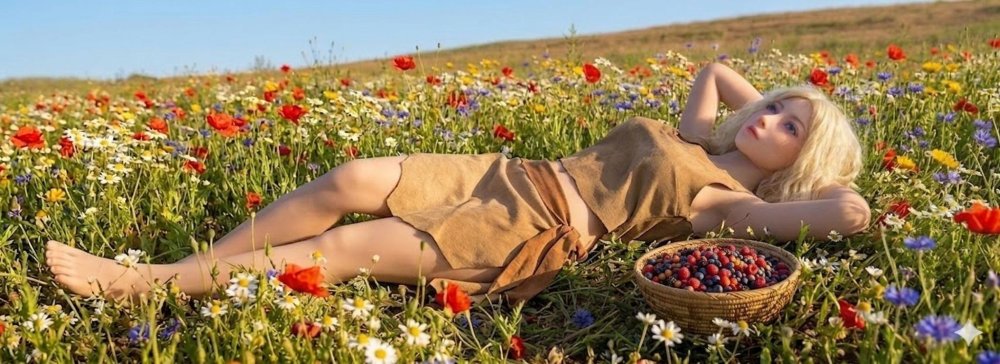
“Come sit.” The kitchen table was already half-cleared. She moved a stack of papers to the side, reached into the cabinet, and pulled down two glasses. A bottle of wine followed. She poured without asking. I picked up the glass. Took a sip. Put it back down. We sat. I laid the pictures on the table. This picture was on top...
.
.
“Tell me what the museum lady said.”

“Oh, not much. More of a history lesson than answers I was really looking for.”

Rachel leaned back slightly. “So a waste of time?”

“No. I had a fun day.”

Rachel studied me for a second, then reached over and grabbed the picture. She held it up between us. “I really like this picture. Reminds me of a Claude Monet.”

“Well, Monet wasn’t around 2,000 years ago.”

“I’ll prove it to you.” Rachel stood up immediately, walked over to her computer, and started typing. Fast. Focused. “Sent to the printer. It’s coming. You'll see what I mean.”

She came back and sat down again. “OK. Now tell me what the museum lady said.”

I remembered it all. “Her name was Emily. She said the land didn’t really have an official name. No boundary markers. No maps. No single word for the whole of it. But the place was known through use, through paths worn into grass, through the bend of the river, through the stands of oak and hickory that broke the open prairie. The people who moved through that region understood it as part of a larger system. River. Bluff. Woodland. Tallgrass. What we call the Rock River Valley now, she said it would have just been known by how it moved. Where it bent. Where the current changed. And the prairie to the west, she said that was where the ground opened. Where the sun stayed longer.

She said this”, as I nodded toward the picture, “would be late summer. Late July. Early August. Everything that was going to bloom had already bloomed. Everything that was going to fruit had started to ripen. She said that overlap doesn’t last long. The flowers, she named them: Wild bergamot, Blue vervain, Yarrow. Fleabane, Butterfly weed. Black-eyed Susans.

She said the colors would all be there at the same time. Blue. White. Orange. Yellow. Dense. Not uniform. Layered. Movement everywhere. Insects. Wind. Light shifting. She said you wouldn’t react to it. You would just register it.

The berries, she said those wouldn’t be from the same place. Blueberries. Raspberries. Maybe blackberries. Edges. Near trees. Disturbed ground. You’d have to move to collect them. Then come back. She said this time of year…” I paused. “…there’s energy everywhere. If you know where to look.”

Rachel didn’t interrupt.

“Emily had said the position matters. How she’s lying. It’s not random. You can see the sky, but still track movement without turning your head. Hands behind the head doesn’t mean relaxed. It means nothing immediate needs to be done. She said that’s rare.”

I stopped.

“The prairie makes that possible. You can see distance. Nothing approaches without being seen. She said the basket being there means the work isn’t done. It’s paused. That’s different.”

The printer went silent. It was done. Rachel turned her head, got up, walked over, pulled out the page. She looked at it for a second, then turned and walked back to the table. She held it out toward me. A grin from ear to ear. "Monet."

.
.
"Now go back and have the museum lady explain this one." I could see that wicked smile on Rachel's face as she shouted out. “Your other mom was a real bad ass!”
.
👁 Reply Preview
Loading preview…

Please log in to join the conversation

Log In

Manage Thread Tags

×

Current Tags:

Add Tags:

Reactions

×