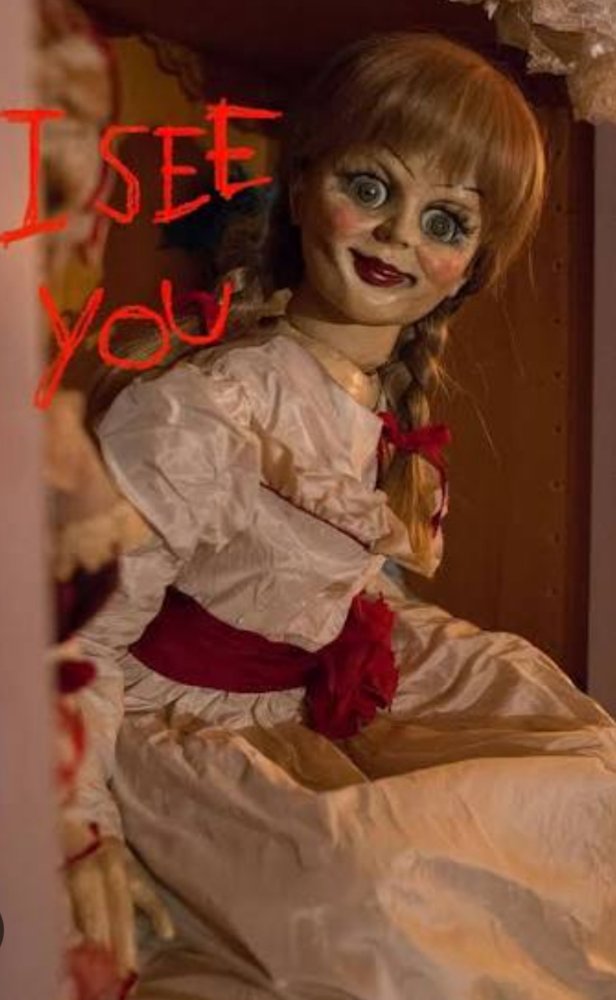


Fascinated by the eerie, uncanny, or the downright unsettling?
Then welcome to the Creepy Dolls thread, a space to explore, showcase, and celebrate dolls that give us the chills.
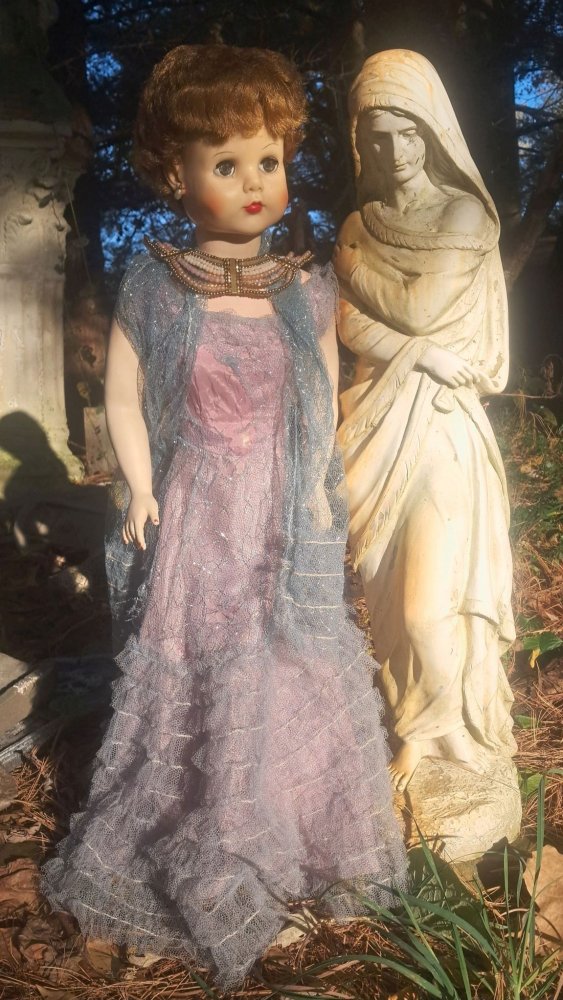
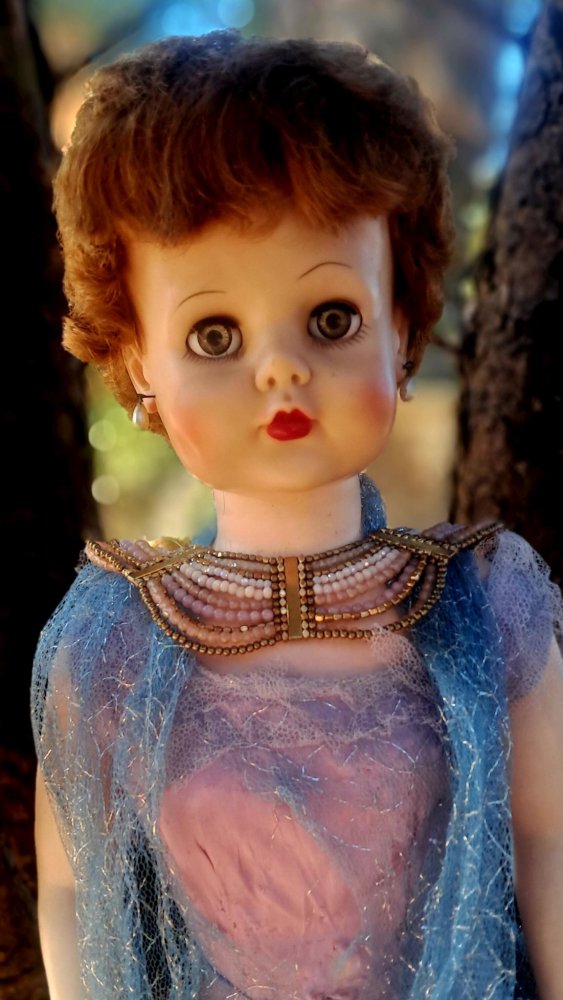 And how do I know that she is evil? Um, that is my necklace that she stole from me when I wasn't looking. Just look at that evil stare.
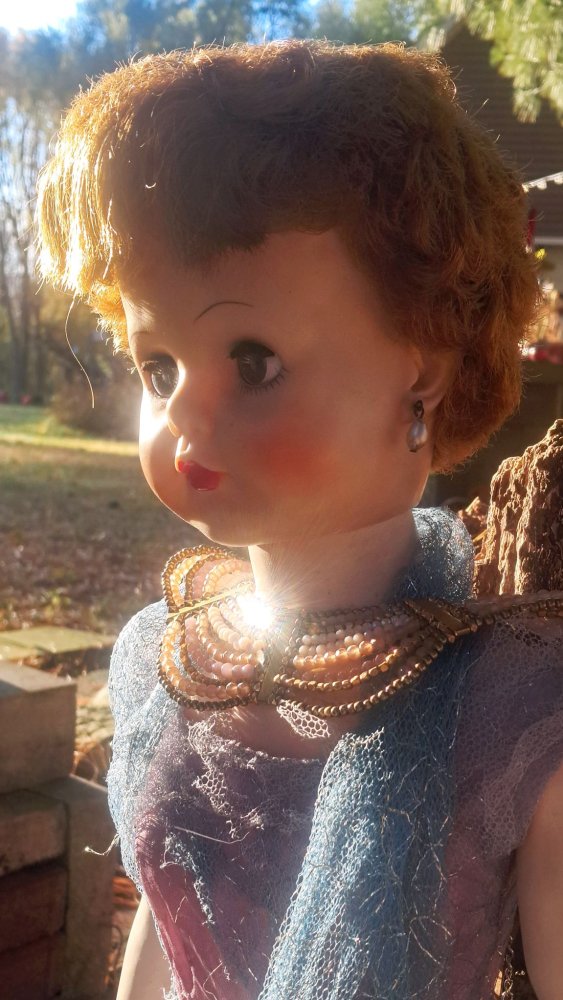 She looks so innocent here but don't be fooled.
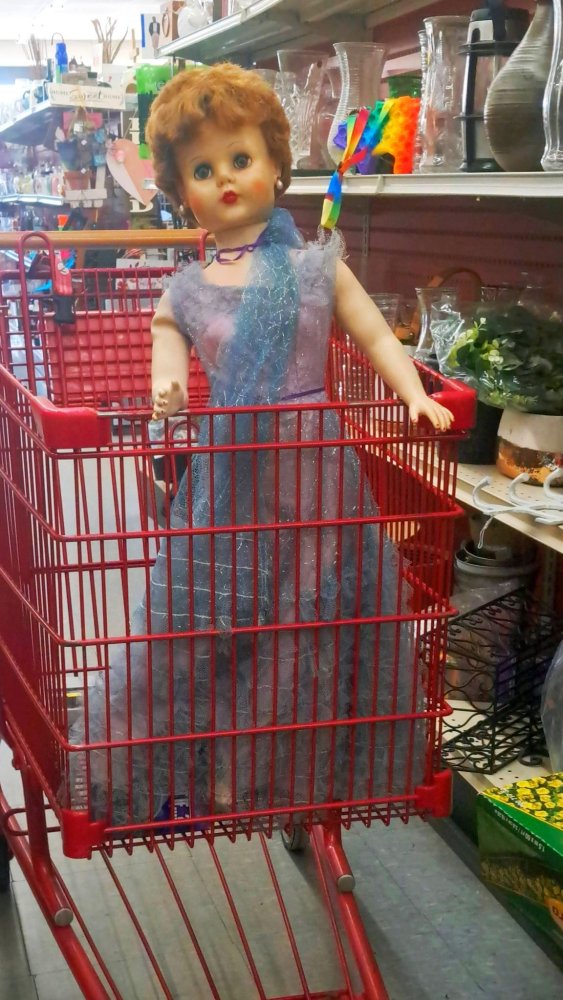
 Here is she is in my bestie's shopping cart (or trolley as you Brits refer to them) at the Salvation Army thrift store. :unsure:
For the life of me, I don't know why you call them trolleys. Trolleys run on tracks and are powered by overhead wires. :rolleyes:
But anyway, he wouldn't listen to my advice to let someone else take her home. I mean, look at the expression on her face. You can tell that she is already planning something sinister.
 At this point you are probably wondering, "What are creepy dolls?" so let me tell you all about creepy dolls...
Dolls have long walked the line between charm and unease. Some are comforting companions; others, unnervingly lifelike, can make even adults shiver. But when it comes to intentionally creepy dolls, the history raises a classic “chicken or egg” question: did horror movies inspire the dolls, or did dolls inspire the horror? The answer is a mix of both, and it’s a fascinating journey through time, culture, and psychology.
The Early Unease: Antique Dolls (Late 1800s – Early 1900s)
The first dolls that might now be called “creepy” were never intended to scare. German and French porcelain dolls, with their glassy eyes, rigid postures, and expressionless faces, were crafted for elegance and play. Yet today, those same dolls can feel unsettling. Faded paint, cracked porcelain, and worn fabrics give them an almost ghostly quality, triggering a deep-seated human discomfort with objects that are “almost alive.”
These antique dolls planted the earliest seeds of unease but they were not yet horror icons. They existed quietly in nurseries and parlors, innocent but uncanny, waiting for cultural forces to reinterpret them.
Dolls on Screen: Early Film Experiments (1940s – 1970s)
Film directors soon discovered the unnerving potential of dolls. Ventriloquist dummies in Dead of Night (1945) and Italian horror experiments like The Doll (1963) played with the lifelike-yet-lifeless quality of dolls, but mostly as props in larger narratives. Meanwhile, real-life stories of haunted dolls, such as the legend of Annabelle in the 1970s, provided fodder for public fascination, blending folklore with eerie realism.
By the 1970s, the idea of a doll as a source of horror was taking shape: antique or ordinary dolls could become symbols of supernatural or psychological menace.
The Horror Doll Icon: Chucky and the 1980s Explosion
The late 1980s marked a turning point. Child’s Play (1988) introduced Chucky, a doll possessed by a serial killer. Suddenly, the idea of a doll as a fully realized horror antagonist became mainstream. It wasn’t just a prop, it was a character with motive, malice, and personality. The cultural impact was immediate: dolls were no longer just toys or curiosities; they were potential vessels of terror.
Around the same time, collectors began to see a market for dolls that embraced this dark side. While Chucky and similar creations were fictional, they set the stage for manufacturers to create dolls intended to thrill or scare from the moment they were made.
From Niche to Market: Horror Dolls Become Collectibles (1990s – 2000s)
Companies like Living Dead Dolls (1998) formalized the commercial market for intentionally creepy dolls. These dolls were designed to look eerie from the start: pale faces, dark eyes, gothic clothing, and macabre themes. Horror films and haunted-doll legends had primed the public to respond to dolls that blurred the line between toy and nightmare.
By the 2000s, stores like Spirit Halloween and major retailers could sell shelves of intentionally creepy dolls, showing that the commercial appetite for fear-inducing toys was fully established. Yet even as these modern dolls proliferated, the antique aesthetic remained influential, linking new creations to a long lineage of eerie toys.
Shifting Paradigms: Antique vs. Modern Horror Dolls (2010s – Today)
Classic horror dolls in film usually have age, decay, or history: Annabelle, Dead Silence, Child’s Play, all rely on the antique or “used” look to heighten fear. The unease comes not just from the doll itself, but from its story, its age, and the sense that it has existed in a liminal space between life and object.
Modern horror dolls, however, are breaking this mold. M3GAN (2023) presents a new kind of terror: a technologically advanced, AI-powered doll that is brand-new but unnervingly lifelike. The fear no longer stems from age or decay, but from realism, autonomy, and unpredictability. The narrative shows that the creepy-doll tradition evolves with cultural anxieties, whether they’re about haunted antiques or the rise of AI.
My Conclusion
Creepy dolls are the product of a long cultural feedback loop. Antique dolls offered the first glimpses of unease, horror films amplified and personified that unease, and modern doll manufacturers now create toys explicitly to thrill or scare. Stores like Spirit Halloween showcase the contemporary range, but the roots go deep: psychology, cinema, and history all collide in these small, uncanny objects. Whether dolls inspired horror or horror inspired dolls, the fascination, and the fear, remains as powerful as ever.
So now it’s your turn.
Share photos of your own creepy dolls, whether antique, modern, or intentionally scary. Let's explore why dolls can both enchant and frighten. Whether your doll is haunted, high-tech, or simply uncanny, this is the place to show it off and maybe make us all shiver a little in the process.
--Hanna--
.
Then welcome to the Creepy Dolls thread, a space to explore, showcase, and celebrate dolls that give us the chills.
For the life of me, I don't know why you call them trolleys. Trolleys run on tracks and are powered by overhead wires. :rolleyes:
But anyway, he wouldn't listen to my advice to let someone else take her home. I mean, look at the expression on her face. You can tell that she is already planning something sinister.
Dolls have long walked the line between charm and unease. Some are comforting companions; others, unnervingly lifelike, can make even adults shiver. But when it comes to intentionally creepy dolls, the history raises a classic “chicken or egg” question: did horror movies inspire the dolls, or did dolls inspire the horror? The answer is a mix of both, and it’s a fascinating journey through time, culture, and psychology.
The Early Unease: Antique Dolls (Late 1800s – Early 1900s)
The first dolls that might now be called “creepy” were never intended to scare. German and French porcelain dolls, with their glassy eyes, rigid postures, and expressionless faces, were crafted for elegance and play. Yet today, those same dolls can feel unsettling. Faded paint, cracked porcelain, and worn fabrics give them an almost ghostly quality, triggering a deep-seated human discomfort with objects that are “almost alive.”
These antique dolls planted the earliest seeds of unease but they were not yet horror icons. They existed quietly in nurseries and parlors, innocent but uncanny, waiting for cultural forces to reinterpret them.
Dolls on Screen: Early Film Experiments (1940s – 1970s)
Film directors soon discovered the unnerving potential of dolls. Ventriloquist dummies in Dead of Night (1945) and Italian horror experiments like The Doll (1963) played with the lifelike-yet-lifeless quality of dolls, but mostly as props in larger narratives. Meanwhile, real-life stories of haunted dolls, such as the legend of Annabelle in the 1970s, provided fodder for public fascination, blending folklore with eerie realism.
By the 1970s, the idea of a doll as a source of horror was taking shape: antique or ordinary dolls could become symbols of supernatural or psychological menace.
The Horror Doll Icon: Chucky and the 1980s Explosion
The late 1980s marked a turning point. Child’s Play (1988) introduced Chucky, a doll possessed by a serial killer. Suddenly, the idea of a doll as a fully realized horror antagonist became mainstream. It wasn’t just a prop, it was a character with motive, malice, and personality. The cultural impact was immediate: dolls were no longer just toys or curiosities; they were potential vessels of terror.
Around the same time, collectors began to see a market for dolls that embraced this dark side. While Chucky and similar creations were fictional, they set the stage for manufacturers to create dolls intended to thrill or scare from the moment they were made.
From Niche to Market: Horror Dolls Become Collectibles (1990s – 2000s)
Companies like Living Dead Dolls (1998) formalized the commercial market for intentionally creepy dolls. These dolls were designed to look eerie from the start: pale faces, dark eyes, gothic clothing, and macabre themes. Horror films and haunted-doll legends had primed the public to respond to dolls that blurred the line between toy and nightmare.
By the 2000s, stores like Spirit Halloween and major retailers could sell shelves of intentionally creepy dolls, showing that the commercial appetite for fear-inducing toys was fully established. Yet even as these modern dolls proliferated, the antique aesthetic remained influential, linking new creations to a long lineage of eerie toys.
Shifting Paradigms: Antique vs. Modern Horror Dolls (2010s – Today)
Classic horror dolls in film usually have age, decay, or history: Annabelle, Dead Silence, Child’s Play, all rely on the antique or “used” look to heighten fear. The unease comes not just from the doll itself, but from its story, its age, and the sense that it has existed in a liminal space between life and object.
Modern horror dolls, however, are breaking this mold. M3GAN (2023) presents a new kind of terror: a technologically advanced, AI-powered doll that is brand-new but unnervingly lifelike. The fear no longer stems from age or decay, but from realism, autonomy, and unpredictability. The narrative shows that the creepy-doll tradition evolves with cultural anxieties, whether they’re about haunted antiques or the rise of AI.
My Conclusion
Creepy dolls are the product of a long cultural feedback loop. Antique dolls offered the first glimpses of unease, horror films amplified and personified that unease, and modern doll manufacturers now create toys explicitly to thrill or scare. Stores like Spirit Halloween showcase the contemporary range, but the roots go deep: psychology, cinema, and history all collide in these small, uncanny objects. Whether dolls inspired horror or horror inspired dolls, the fascination, and the fear, remains as powerful as ever.
So now it’s your turn.
Share photos of your own creepy dolls, whether antique, modern, or intentionally scary. Let's explore why dolls can both enchant and frighten. Whether your doll is haunted, high-tech, or simply uncanny, this is the place to show it off and maybe make us all shiver a little in the process.
--Hanna--
.