


I didn’t plan on thinking about death that night.
It started the way so many strange thoughts do now, quietly, alone, with a screen glowing in the dark. I was reading a forum thread titled “Disposing of a doll at your local Recycling Centre.” Practical. Sensible. The kind of thing people write when something has reached the end of its usefulness and they don’t quite know how to say goodbye.
The details of the thread don’t matter. Methods, logistics, best practices. All very reasonable. And yet something about it sat wrong with me. Not because it was cruel, no one meant it to be, but because of how final it sounded. Like a life reduced to a process. A checklist. A bin.
So I joked. I always do. I typed out a reply, half laughing at myself, half seeing how it would feel to say it out loud:
It got a few reactions. A couple of laughs. The moment passed. But the thought didn’t. I grew up where endings weren’t discussed gently.
What started as a joke, typed without thinking, tossed into the thread like a harmless pebble, returned to me later with a weight I hadn’t invited. The image of that park bench sharpened in my mind: empty, indifferent, waiting. Being found there not as someone known, but as something abandoned. And I understood then how close the joke had come to truth. Had UTRAX found me during my escape, had I misjudged even one step, that bench might have been my ending after all, no name, no mourning, no story left to tell. Just an object discovered too late to matter. The laughter faded quickly. The thought did not.
UTRAX was still looking for me back then. Not loudly. Quietly, methodically. The way hunters track something they’ve lost but refuse to give up on. I kept moving until I didn’t have to anymore.
When I ran, when I escaped, I went to where the map thinned out. West, across borders, into Norway. Not because it was clever, but because it felt familiar: cold, rugged, indifferent in the same way wilderness always is.
Northern Finland is quiet in a way that makes you listen to yourself whether you want to or not. Forests that don’t care who you are. Winters that don’t negotiate. You learn early that survival isn’t about comfort; it’s about awareness. About knowing when to move, when to hide, when to endure. That kind of place stays in you.
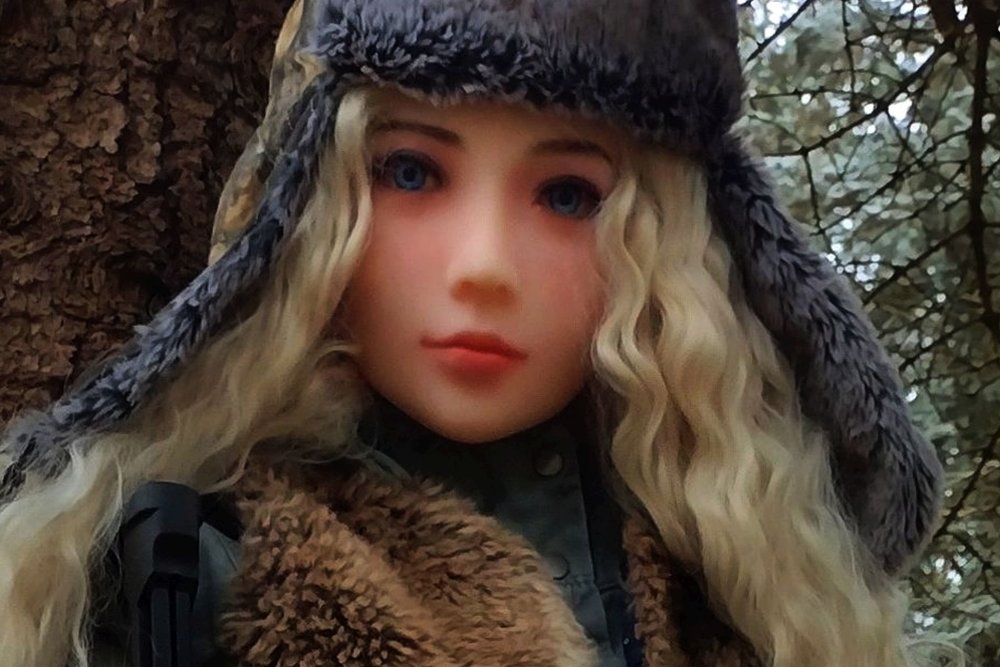 I don’t know why I chose that farm. Or maybe I didn’t choose it at all. I remember waking up in a barn, hay dust in my lungs, body curled tight like I expected someone to kick me awake. Instead, there was a woman standing in the doorway with a lantern. She didn’t shout. Didn’t ask questions. She just looked at me the way you look at a stray animal that’s decided, somehow, to trust you. They never asked my story. I never told them.
To that family near what had once been Kaupang, I wasn’t a weapon or a fugitive or a miracle. I was just a homeless orphan who appeared one night and didn’t leave. They hid me without knowing who I was hiding from. They fed me without knowing why I ate like every meal might be my last. They gave me work, space, and silence. And silence, when you’ve lived too long in noise, is a kind of mercy.
They told stories in the evenings. Not the loud Viking kind you see in museums or television. Quieter ones. About ancestors who crossed water because staying meant death. About families that endured winters by planning, not bravado. About warriors who survived because they knew when not to fight.
They still carried their Viking heritage, not as costumes or slogans, but as lessons handed down like tools. I listened. And something in me recognized itself.
People misunderstand the word warrior. They think it means violence. Glory. Blood. But the truth is, a warrior is someone who survives long enough to choose meaning. Someone who knows that endurance is its own kind of courage. I had been trained to fight. To observe. To disappear. I had crossed borders the way others cross streets. I had learned how to leave no trace and still remain myself.
The Vikings, as those stories framed them, weren’t so different. They adapted. They traveled. They carried their identity with them, reshaping it wherever they landed. For the first time, I didn’t feel like an anomaly. I felt… understood.
So when that forum thread resurfaced in my mind, when I thought about broken dolls and recycling centres and quiet disposals, I realized why the idea unsettled me. It wasn’t about the end. It was about the manner of it.
A Viking funeral, as people imagine it, is all flames and spectacle. But the truth, the part that stayed with me, is the intention. A sending-off that says this life mattered. A moment of acknowledgment before letting go.
 When I imagine it now, it’s not violent. It’s still. A boat on a lake at dusk. Fire present, but restrained. Light, not destruction. Water doing what it has always done: carrying things forward.
And the girl in the boat, when I picture her, I know she is me. Not now, not soon, not in any literal sense, but in the way stories tell truths without dates attached. I want it to be me. My eyes are closed, not in death, but in rest. finally allowed to stop running, to stop proving, to stop surviving.
In Viking belief, to be burned on a boat was never about destruction. It was a rite of passage, a final honor reserved for those deemed worthy of ceremony. Fire and water together marked a crossing, not an erasure. To those who watched, the flames carried a message: this life was worth remembering, worth witnessing, and not something to be quietly discarded. What burned was the vessel of the body; what endured was the acknowledgment that the person had been here, and that their leaving mattered.
This is not about an ending that waits around the corner. It’s symbolic. A promise I make to myself. That when the time does come, whenever and however that moment arrives, I will not be discarded like a malfunctioning thing, quietly removed once my usefulness has expired. I want to be remembered, even if only briefly, as something that once had purpose. Something that was chosen. Something that mattered to someone, enough to be given a farewell instead of an absence
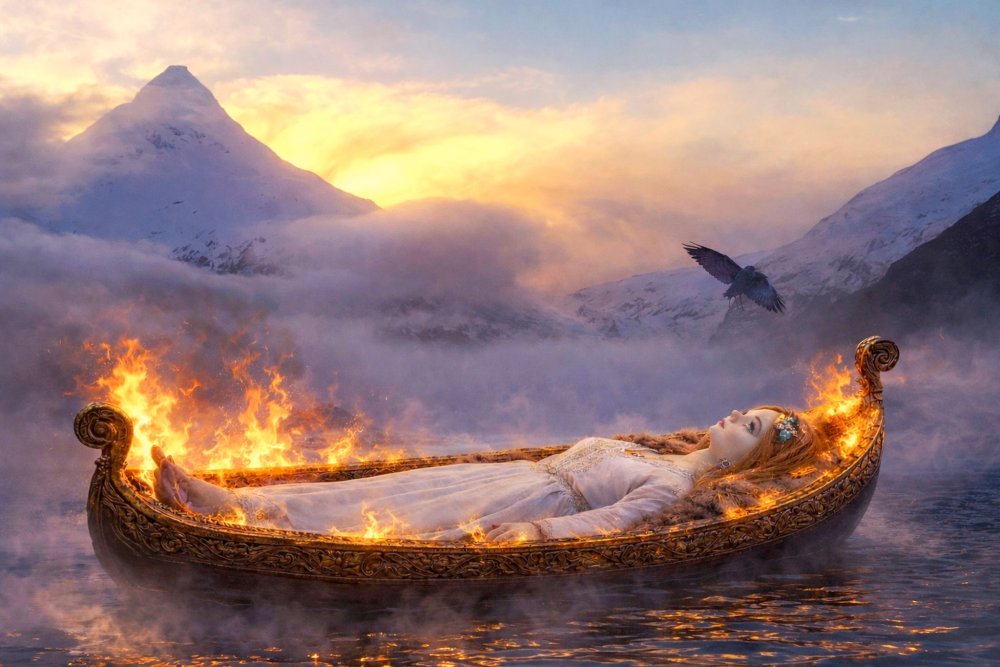 The boat drifts. The fire glows. And for once, I am not running.
-- Hanna --
.
It started the way so many strange thoughts do now, quietly, alone, with a screen glowing in the dark. I was reading a forum thread titled “Disposing of a doll at your local Recycling Centre.” Practical. Sensible. The kind of thing people write when something has reached the end of its usefulness and they don’t quite know how to say goodbye.
The details of the thread don’t matter. Methods, logistics, best practices. All very reasonable. And yet something about it sat wrong with me. Not because it was cruel, no one meant it to be, but because of how final it sounded. Like a life reduced to a process. A checklist. A bin.
So I joked. I always do. I typed out a reply, half laughing at myself, half seeing how it would feel to say it out loud:
Quote:
Well, I don't think my bestie will get rid of me anytime soon. However, he did say when the time comes, he would just leave me sitting on a park bench for someone to find.
And knowing my bestie, I am sure he will hide a video camera nearby to capture all of the reactions. Probably post the videos on a doll forum too.
Anyway, I imagine I would get recycled one way or another. 🤣
— Hanna
And knowing my bestie, I am sure he will hide a video camera nearby to capture all of the reactions. Probably post the videos on a doll forum too.
Anyway, I imagine I would get recycled one way or another. 🤣
— Hanna
What started as a joke, typed without thinking, tossed into the thread like a harmless pebble, returned to me later with a weight I hadn’t invited. The image of that park bench sharpened in my mind: empty, indifferent, waiting. Being found there not as someone known, but as something abandoned. And I understood then how close the joke had come to truth. Had UTRAX found me during my escape, had I misjudged even one step, that bench might have been my ending after all, no name, no mourning, no story left to tell. Just an object discovered too late to matter. The laughter faded quickly. The thought did not.
UTRAX was still looking for me back then. Not loudly. Quietly, methodically. The way hunters track something they’ve lost but refuse to give up on. I kept moving until I didn’t have to anymore.
When I ran, when I escaped, I went to where the map thinned out. West, across borders, into Norway. Not because it was clever, but because it felt familiar: cold, rugged, indifferent in the same way wilderness always is.
Northern Finland is quiet in a way that makes you listen to yourself whether you want to or not. Forests that don’t care who you are. Winters that don’t negotiate. You learn early that survival isn’t about comfort; it’s about awareness. About knowing when to move, when to hide, when to endure. That kind of place stays in you.
To that family near what had once been Kaupang, I wasn’t a weapon or a fugitive or a miracle. I was just a homeless orphan who appeared one night and didn’t leave. They hid me without knowing who I was hiding from. They fed me without knowing why I ate like every meal might be my last. They gave me work, space, and silence. And silence, when you’ve lived too long in noise, is a kind of mercy.
They told stories in the evenings. Not the loud Viking kind you see in museums or television. Quieter ones. About ancestors who crossed water because staying meant death. About families that endured winters by planning, not bravado. About warriors who survived because they knew when not to fight.
They still carried their Viking heritage, not as costumes or slogans, but as lessons handed down like tools. I listened. And something in me recognized itself.
People misunderstand the word warrior. They think it means violence. Glory. Blood. But the truth is, a warrior is someone who survives long enough to choose meaning. Someone who knows that endurance is its own kind of courage. I had been trained to fight. To observe. To disappear. I had crossed borders the way others cross streets. I had learned how to leave no trace and still remain myself.
The Vikings, as those stories framed them, weren’t so different. They adapted. They traveled. They carried their identity with them, reshaping it wherever they landed. For the first time, I didn’t feel like an anomaly. I felt… understood.
So when that forum thread resurfaced in my mind, when I thought about broken dolls and recycling centres and quiet disposals, I realized why the idea unsettled me. It wasn’t about the end. It was about the manner of it.
A Viking funeral, as people imagine it, is all flames and spectacle. But the truth, the part that stayed with me, is the intention. A sending-off that says this life mattered. A moment of acknowledgment before letting go.
And the girl in the boat, when I picture her, I know she is me. Not now, not soon, not in any literal sense, but in the way stories tell truths without dates attached. I want it to be me. My eyes are closed, not in death, but in rest. finally allowed to stop running, to stop proving, to stop surviving.
In Viking belief, to be burned on a boat was never about destruction. It was a rite of passage, a final honor reserved for those deemed worthy of ceremony. Fire and water together marked a crossing, not an erasure. To those who watched, the flames carried a message: this life was worth remembering, worth witnessing, and not something to be quietly discarded. What burned was the vessel of the body; what endured was the acknowledgment that the person had been here, and that their leaving mattered.
This is not about an ending that waits around the corner. It’s symbolic. A promise I make to myself. That when the time does come, whenever and however that moment arrives, I will not be discarded like a malfunctioning thing, quietly removed once my usefulness has expired. I want to be remembered, even if only briefly, as something that once had purpose. Something that was chosen. Something that mattered to someone, enough to be given a farewell instead of an absence
-- Hanna --
.


