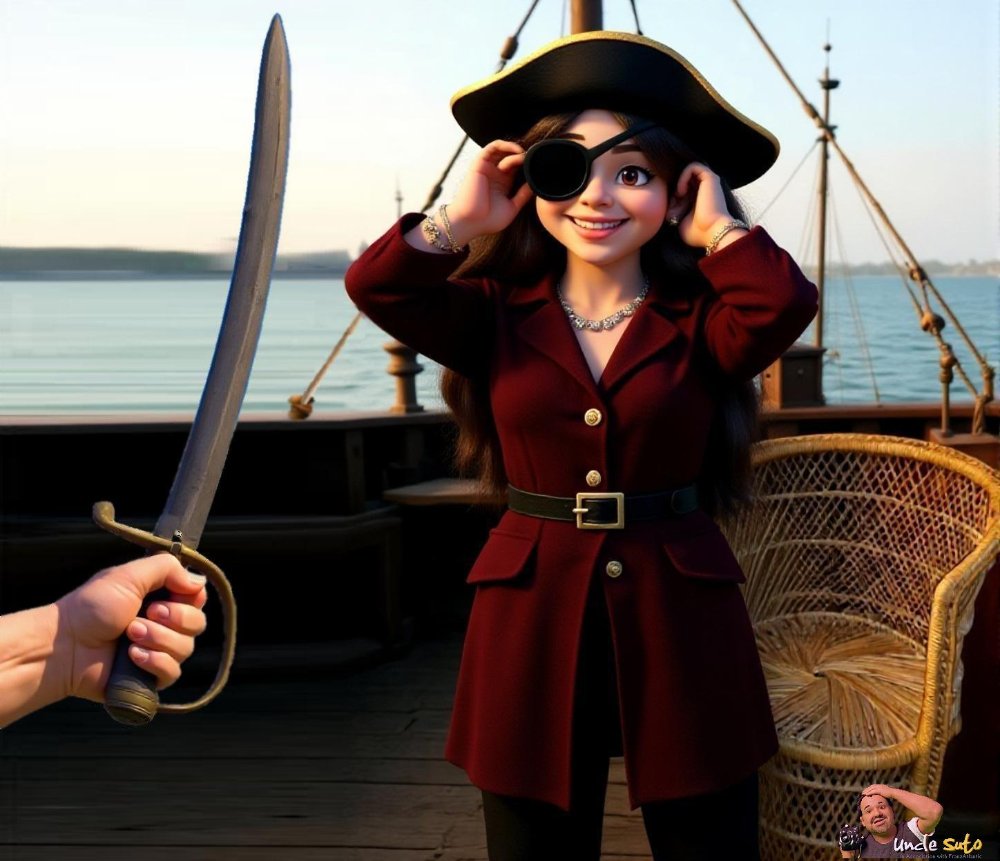
Personally, I would not call that AI art (meant as a compliment). Perhaps AI aided art. Not sure what the right term is - Computer Generated art!?
People often assume that when you upload a photo to an AI tool for editing, or type a description into a text-to-image generator, the AI is simply “helping” or “enhancing” your work in some collaborative way. The reality is more fundamental. In both cases, the image the AI produces is not an extension of your work or a modification of your input; it is, from start to finish, a creation generated entirely by the AI.
This misunderstanding becomes even more pronounced with AI tools that accept uploaded images for “editing.” It feels intuitive to assume the AI is directly modifying your original photo, but that is not what happens. The AI analyzes the image to identify shapes, colors, textures, lighting, and objects, then reconstructs a new image based on its interpretation of both the source and your instructions. Parameters such as style, perspective, color palette, and detail level are all determined by the AI using patterns learned during training. While the final result may resemble the original, it is not a true edit. It is a newly generated image that merely references the source you provided.
This distinction matters because it reframes what it means to “create” with AI.
Whether starting from text or an uploaded image, at most your contribution is mere suggestion, the output is 100% AI-generated. In neither scenario are you producing pixels, shaping light, or making compositional decisions in the traditional sense. Your role is limited to selecting inputs and guiding interpretation. Even when the result matches your intent perfectly, it remains the product of the AI’s training, internal decision-making, and generative process.
This distinction matters because it reframes what it means to “create” with AI. Whether starting from text or an uploaded image, the output is 100% AI-generated. In neither scenario are you producing pixels, shaping light, or making compositional decisions in the traditional sense. Your role is limited to selecting inputs and guiding interpretation. Even when the result matches your intent perfectly, it remains the product of the AI’s training, internal decision-making, and generative process.
Recognizing this is essential for responsible engagement with generative AI in art, photography, and design. Treating AI as a tool that merely assists or enhances human work obscures questions of authorship, originality, and value. Using or liking AI-generated images does not make someone a co-creator in the traditional sense, because the image itself was not created by human hands or captured by a camera. The distinction may feel subtle, but it is foundational. In both text-based generation and image-based prompts, the AI is not assisting, it is producing.
An additional complication emerges when users rely on multiple AI platforms in sequence to achieve a desired result. This introduces a phenomenon comparable to generation loss in analog media, such as copying VHS tapes or audio cassettes. Each copy drifts further from the original as detail softens and subtle qualities degrade.
With generative AI, this loss is conceptual rather than physical. When one AI’s output is fed into another, the second system has no insight into how the first arrived at its decisions. It cannot distinguish between intentional choices, compromises, or artifacts of the previous model’s training. It sees only a flattened image, stripped of context, intent, and process, and begins its own interpretation from scratch.
With each additional pass, more information disappears. Prompts, internal weightings, and the reasoning behind lighting, texture, anatomy, or mood do not survive the transition. Each AI reconstructs the image according to its own assumptions and biases, effectively guessing what the previous system meant. The result may appear more polished or stylized, but it is increasingly detached from any coherent creative lineage.
Rather than increasing control or intentionality, chaining AI tools together makes the outcome more synthetic. Each step overwrites the last with a new interpretation that does not understand the decisions made before it. What looks like refinement is actually repeated reinterpretation, replacing deliberation with layered statistical guesses.
Seen this way, the need to move between multiple AI platforms does not demonstrate artistic authorship; it exposes the fragility of the process. If an image truly belonged to a human creator, it would not need to be repeatedly reimagined by systems that cannot share intent or reasoning. Each AI treats the prior output as raw material, not as a work with history. This is not collaboration. It is iterative erasure.
In the end, the conclusion remains the same. Whether an image is generated in a single step or passed through multiple AI systems, the result is fully AI-generated. In fact, the more systems involved, the further meaningful human authorship recedes. What remains is not a refined vision, but a chain of educated guesses layered atop one another, increasingly distant from both human intent and any original source.
... and that, my friends, is why my bestie only uses AI as a last resort when there are no reasonable alternatives. Never as a first choice.