Logo

The Advanced Passenger Train

Cuthbert Dibble
Companion
Thread Starter
Joined: Sep 2022
#1 24 Jul 2025 at 10:16 AM 44 views
Not sure why I randomly thought of this this morning.

When I was a young lad, the pride of my train set was "The Advanced Passenger Train". A cool name and I thought it was cool.

Alas, in real life it was a typical uniquely British failure:


https://en.wikipedia.org/wiki/Advanced_Passenger_Train
Hanna
forum moderator
Joined: Jun 2024
Lives with
Pexter
Pexter
#2 24 Jul 2025 at 2:13 PM 44 views
The UK’s Advanced Passenger Train (APT) failed in large part due to Not Invented Here (NIH) syndrome—a desire to develop a uniquely British solution that could outperform foreign rivals without collaborating or learning from them. British Rail engineers aimed to leap ahead of France’s TGV and Japan’s Shinkansen by developing pioneering features like active tilt technology, hydrokinetic brakes, and gas turbine propulsion, all within a single ambitious prototype. However, this inward-looking, all-or-nothing approach led to a cascade of challenges.

Unlike France and Japan—who invested in dedicated high-speed lines and adopted evolutionary improvements to proven systems—the UK chose to push the limits of innovation on aging, curved Victorian infrastructure. While tilting technology was necessary to achieve high speeds on Britain’s existing track geometry, it proved to be ahead of its time and under-supported. Passengers reported motion sickness during test runs; computer-controlled systems were unreliable; and the gas turbines (borrowed from aviation) proved inefficient and were later abandoned for electric traction.

Furthermore, British Rail did not cooperate with foreign manufacturers like Alstom or Hitachi, nor did it attempt to import or license stable, working components like those used in the TGV’s synchronous traction systems or the Shinkansen’s dedicated track design. There was no participation in early UIC (International Union of Railways) standardization efforts, and little attempt to harmonize with the growing body of European or global high-speed rail knowledge.

Political and media pressure also hastened APT’s public testing before it was ready, leading to high-profile failures in 1981 when the APT-E (experimental) and APT-P (prototype) trains were introduced with great fanfare—and quickly withdrawn after brake failures and passenger complaints. Support within the Thatcher government was tepid, and British Rail’s funding was slashed just when refinement was most needed.

Ironically, the tilting technology—long mocked in the UK press—was eventually licensed to Fiat Ferroviaria in Italy, where it became the core of the successful Pendolino trains used across Europe (and later brought back to Britain decades later by Virgin Trains). In other words, Britain’s technology did succeed—but only after it was adopted and refined abroad.

Had British Rail collaborated more internationally, tempered its technological ambition with practical cooperation, and ensured political and financial continuity, APT might have put the UK at the forefront of global high-speed rail. Instead, the project became a cautionary tale of brilliant engineering hampered by nationalistic pride, bureaucratic isolation, and inconsistent political will.
.
Jedzed
Harper’s Happy Husband
Joined: May 2024
#3 24 Jul 2025 at 2:28 PM 44 views
Hanna said:
The UK’s Advanced Passenger Train (APT) failed in large part due to Not Invented Here (NIH) syndrome—a desire to develop a uniquely British solution that could outperform foreign rivals without collaborating or learning from them. British Rail engineers aimed to leap ahead of France’s TGV and Japan’s Shinkansen by developing pioneering features like active tilt technology, hydrokinetic bra...
Sadly, that’s Britain all round. During the Covid pandemic, our government was encouraged to speak to the South Koreans who had incredibly detailed policies because they were so used to dealing with other pandemics - SARS, MURS etc..
But did they do that? No, of course they didn’t. They decided to do it alone, and messed the whole thing up.
Cuthbert Dibble
Companion
Thread Starter
Joined: Sep 2022
#4 24 Jul 2025 at 3:21 PM 44 views
Hanna said:
The UK’s Advanced Passenger Train (APT) failed in large part due to Not Invented Here (NIH) syndrome—a desire to develop a uniquely British solution that could outperform foreign rivals without collaborating or learning from them. British Rail engineers aimed to leap ahead of France’s TGV and Japan’s Shinkansen by developing pioneering features like active tilt technology, hydrokinetic bra...
Hello Hanna,

You have great knowledge 🙏

I remember thinking, why didn't we do high-speed rail like the French. Then we had the disaster of HS2. 10 years in the making so far, projected cost of £100 billion, and we still don't have a high-speed train that does the paltry 100 or so miles from London to Birmingham 😆 (and will only save 30 minutes on the journey.)

Government controlled tax payer funded projects are a total disaster in this country. I don't know how Britain achieved the greatest Empire the world has ever seen, only for just over 100 years later we can't even build a paltry train line.

Kind regards,

David
Hanna
forum moderator
Joined: Jun 2024
Lives with
Pexter
Pexter
#5 24 Jul 2025 at 4:23 PM 44 views
Cuthbert Dibble said:
Hello Hanna,


You have great knowledge 🙏


I remember thinking, why didn't we do high-speed rail like the French. Then we had the disaster of HS2. 10 years in the making so far, projected cost of £100 billion, and we still don't have a high-speed train that does the paltry 100 or so miles from London to Birmingham 😆 (and will only save 30 minutes on the journey.)
Thank you. But it is no me, I steal these writing from my BFF who is a long time advocate for expanded passenger rail in the US

But if it is any consolation, it is much worse in the US than any other first world country, allegedly the richest country in the world.

Why High-Speed Rail Fails in the U.S.—And Why the Excuses Don't Hold Track

America loves the idea of high-speed rail in theory. Slick trains, zipping across scenic landscapes, connecting city to city with smooth, quiet efficiency—it’s a vision we borrow freely from France, Japan, Spain, and now even Morocco and China. But in reality, the U.S. is home to some of the slowest “high-speed” rail in the developed world, with decades of broken promises, stalled projects, and outright abandonment. California’s bullet train? Mired in delays and lawsuits. The Texas line? Still a whisper. The Northeast Corridor? Barely faster than it was 40 years ago.

So why has high-speed rail failed in the United States?

Ask most officials or talking heads, and the answer comes dressed in inevitability: “The U.S. is just too big. It works in Japan because cities are close together. Europe is denser. We’re spread out. Trains don’t make sense here.”

But this excuse is misleading—and dangerously so.

Yes, the U.S. has vast land and distant cities. But that should make high-speed rail easier to build, not harder. The argument that our “sprawl” makes rail impractical ignores one massive logistical truth: the more open the land, the cheaper and faster it is to lay track. Buying right-of-way in rural Texas, Nevada, or Colorado is far less expensive than threading a rail line through suburban France or urban Tokyo. If you’re going to build long, straight, high-speed infrastructure, wide open space is an advantage, not a flaw.

The real issue is not geography. It’s policy.

For nearly a century, America has poured its money into highways and airports. The FAA, the interstate highway system, air traffic control, terminal expansions, subsidies for regional airlines, fuel tax breaks, every corner of air and car travel is coated in layers of federal and state support. Meanwhile, passenger rail outside of the northeast corridor, has been left to rot.

If we were to divide transportation funding evenly, say, 50/50 between air and rail, we could build a high-speed network that links major population centers within 100–500 miles of each other:
  • Dallas to Houston
  • Chicago to St. Louis
  • Atlanta to Charlotte
  • San Diego to Las Vegas
  • Seattle to Portland
  • Orlando to Miami

These are not transcontinental journeys. They are medium-range distances where high-speed trains are proven to outcompete air travel in time, convenience, and sustainability. In countries with functioning rail networks, these are precisely the routes where trains dominate. Why? Because once you factor in airport transfers, security lines, and tarmac delays, a three-hour train ride downtown to downtown is simply more efficient than flying.

Yet in the U.S., we continue to prop up short-distance air travel, often with public money, while pretending that high-speed rail is too expensive to try. The irony is staggering. The federal government spends billions to keep small regional airports afloat. It pays to keep flights running between midsized cities that a train could connect more cleanly, more cheaply, and with far less carbon. But trains are expected to “pay for themselves,” while airlines are treated as national necessities. That’s not economics. That’s politics.

And then there’s the fragmentation. No national rail-building strategy. No single regulatory body with the power to push high-speed infrastructure across state lines. Every project becomes a patchwork of local resistance, NIMBY lawsuits, environmental review delays, and political sabotage. No airline has to deal with this level of friction when building a runway.

The U.S. has the engineering know-how, the ridership potential, and the climate incentive to build high-speed rail. What it lacks is the will—and the courage to stop subsidizing one mode of transport while starving another. It’s not that we can’t afford high-speed rail. It’s that we already paid for something else—and refuse to rethink the budget.

So if you’re told high-speed rail can’t work in America because “we’re too big,” push back. We’re not too big. We’re too invested in the past. The failure of high-speed rail in the U.S. isn’t a problem of geography. It’s a problem of imagination—and one we still have time to fix.

Because someday, we’ll look back at this moment and ask why we didn’t build the tracks when the land was still wide open.

But thank for posting the about APT in the first place. Yesterday's post relates doll ownership to the paradigm shift on marijuana. I never know for day to day what relates. To gave me todays parallel. Thank you, all other train lovers, for having trains on this forum. It shows the public that many of us have common interests other than dolls.

Lessons Learned from Stories
https://www.mylovedoll.uk/threads/the-truths-un-truths-about-doll-ownership.2059/interstspage-3#post-40534


-- Hanna --

Bobby Bojangles
Jolly Lord Bojangles Of Plushville
Joined: Aug 2024
#6 24 Jul 2025 at 5:38 PM 44 views
Cuthbert Dibble said:
Not sure why I randomly thought of this this morning.


When I was a young lad, the pride of my train set was "The Advanced Passenger Train". A cool name and I thought it was cool.


Alas, in real life it was a typical uniquely British failure:


https://en.wikipedia.org/wiki/Advanced_Passenger_Train
Yeah I remember that train, I saw the remaining APT at Crewe station, as I was travelling through, they should of given it more time, as you rightly say at one time the UK were ahead of the game with the Industrial Revolution, with beautiful steam trains like the Flying Scotsman, but not anymore.

I've also travelled on a Pendelino train to Manchester, when Virgin ran the contract, shame we had to buy our own engineering and technology back though!

HS2 is the biggest waste of money ever, to make the money back they would have to charge extortionate money for the train tickets and to be honest it would probably be cheaper to fly for businessmen or just have a virtual meeting and if HS2 is ever completed I don't see the average person using it. It's also distroyed beautiful countryside and animal habitats and peoples homes!
Carly
Fantasy Doll
Joined: Nov 2023
Lives with
set track
set track
#7 24 Jul 2025 at 5:45 PM 44 views
Mr track was track side at Croft Spa on the day it broke the record between York and Darlington ,
will dig a photo out , it was the prototype…..

Carly x🚂😁
Bobby Bojangles
Jolly Lord Bojangles Of Plushville
Joined: Aug 2024
#8 24 Jul 2025 at 5:59 PM 44 views
Carly said:
Mr track was track side at Croft Spa on the day it broke the record between York and Darlington ,

will dig a photo out , it was the prototype…..


Carly x🚂😁
That sounds interesting, do you know what record it broke? I'm guessing it was the speed and the time it took to get from York to Darlington. I've been on that line too visiting friends a bit further up North
Carly
Fantasy Doll
Joined: Nov 2023
Lives with
set track
set track
#9 24 Jul 2025 at 7:30 PM 44 views
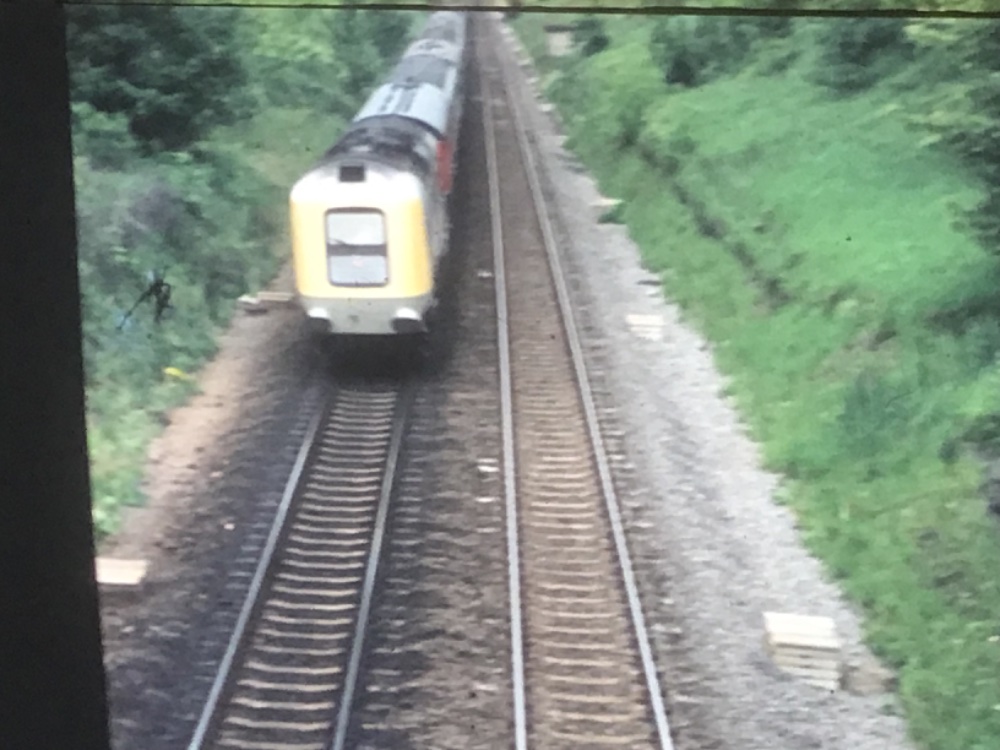
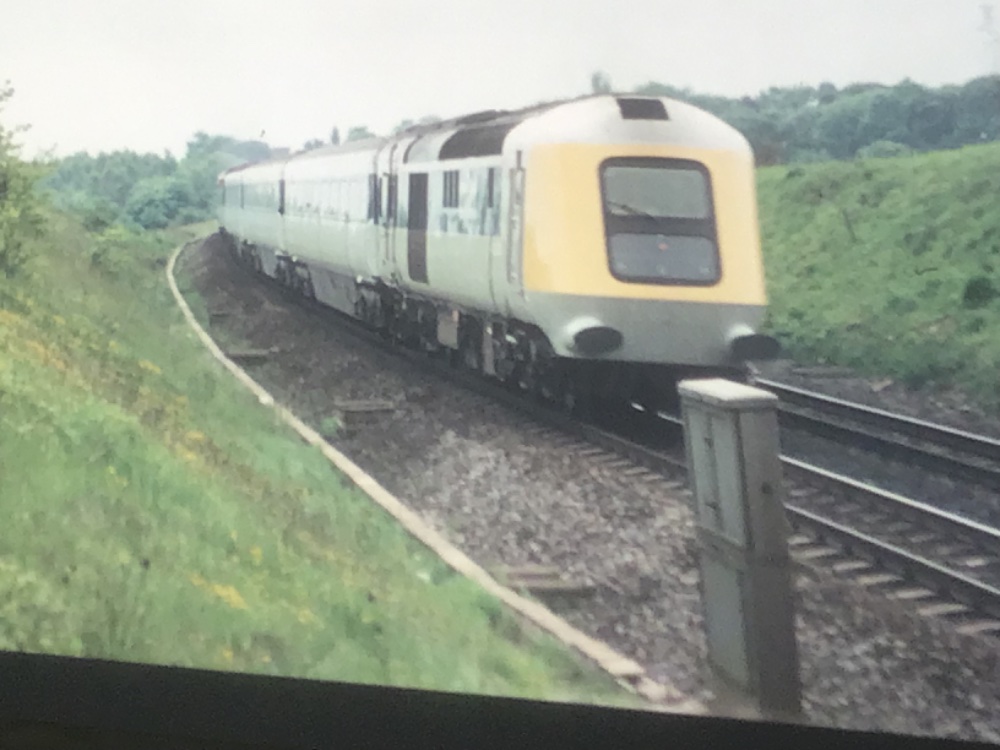
On 12 June 1973 HST record was 143 mph ,
anyway we had the slides out and found the HST near Croft Spa station (once a stopping for the Darlington - Richmond branch on the main line , and it used to get a move on as the non stoppers was just minutes behind) … (photos from slide projector, image on wall)

Note the red just behind the front unit ,, this is the Dynamometer car that records train speed also
Checks the state of the road .

Next picture is the other end unit in reversed blue/grey livery

Carly and mr track xxx
Bobby Bojangles
Jolly Lord Bojangles Of Plushville
Joined: Aug 2024
#10 24 Jul 2025 at 7:48 PM 44 views
Carly said:
On 12 June 1973 HST record was 143 mph ,

anyway we had the slides out and found the HST near Croft Spa station (once a stopping for the Darlington - Richmond branch on the main line , and it used to get a move on as the non stoppers was just minutes behind) … (photos from slide projector, image on wall)


Note the red just behind the front unit ,, this is the Dynamometer car that records train s...
Very interesting, thanks Carly😘😘
You will probably say yuk to the kisses, but I'm gonna send them anyway🤣🤣

Cant believe I was only 3 years old then when that took place!
Bobby Bojangles
Jolly Lord Bojangles Of Plushville
Joined: Aug 2024
#11 24 Jul 2025 at 8:44 PM 44 views
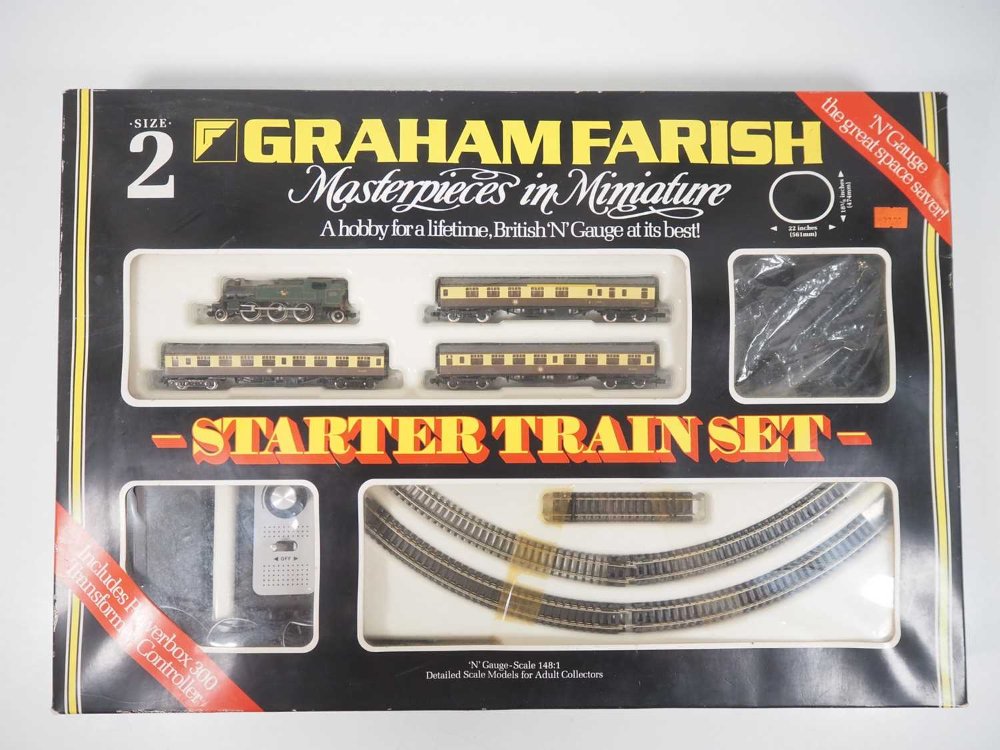
Just changing the subject slightly, I think this was the Graham farish trainset I had, or very similar. I had a station and some houses too. They were kind of polystyrene blocks and you cut out the front and back of the houses and station and stuck them on
Carly
Fantasy Doll
Joined: Nov 2023
Lives with
set track
set track
#12 25 Jul 2025 at 8:32 AM 44 views
Nice set , maybe not worth a lot but very collectable , we remember the Graham Farish buildings
the self adhesive cut out that you stuck on their building blocks , thanks for sharing

Carly xxx
Cuthbert Dibble
Companion
Thread Starter
Joined: Sep 2022
#13 25 Jul 2025 at 8:46 AM 44 views
As someone who was born in the seventies, most of the trains I've been on are of the electric/diesel variety. But I think steam engines were peak railway. Sometimes the progress of technology does not seem like progress.

When I was young I lived in Somerset and they have the West Somerset Railway which goes from Minehead to Bishops Lydeard (the tracks do go all the way to the Taunton mainline station but they don't run services from their unfortunately.) Recently they had the Flying Scotsman running on that line:


I'd love to live in a parallel universe where they made the decision to continue developing steam engines and forget about diesel and electric 😊
Bobby Bojangles
Jolly Lord Bojangles Of Plushville
Joined: Aug 2024
#14 25 Jul 2025 at 11:20 AM 44 views
Cuthbert Dibble said:
As someone who was born in the seventies, most of the trains I've been on are of the electric/diesel variety. But I think steam engines were peak railway. Sometimes the progress of technology does not seem like progress.


When I was young I lived in Somerset and they have the West Somerset Railway which goes from Minehead to Bishops Lydeard (the tracks do go all the way to the Taunton mainline sta...
I stayed near Bishops Lydeard back in 1979 on holiday with my parents. We stayed in a thatch cottage and I got my first taste of Scrumpy from a local farm.

We also watched Moonraker in a cinema in Taunton and went to a toy shop, I wanted the special edition space/ Bond action man, but I got a no from my parents.

I quite liked Somerset, yes I like travelling by steam train. I went on the North York Moors railway from Pickering to Whitby. I think it's one of the longest steam journeys I've been on, beautiful scenery too😁
Bobby Bojangles
Jolly Lord Bojangles Of Plushville
Joined: Aug 2024
#15 25 Jul 2025 at 11:29 AM 44 views
Carly said:
Nice set , maybe not worth a lot but very collectable , we remember the Graham Farish buildings

the self adhesive cut out that you stuck on their building blocks , thanks for sharing


Carly xxx
Yeah I dont really know what happened to it. To be honest I was more a fan of Action Man and war gaming with the little Airfix soldiers
Hanna
forum moderator
Joined: Jun 2024
Lives with
Pexter
Pexter
#16 25 Jul 2025 at 12:13 PM 44 views
The Last Stand of Steam: Wolsztyn, Poland Still Runs the Rails the Old Way
By Hanna – Railfan & Writer

As a lifelong railfan, I’ve followed trains across continents—chasing the last routes, the rarest locomotives, and the stories behind them. But there’s one place I haven’t yet reached. One that’s been sitting near the top of my bucket list for years: Wolsztyn, Poland—the very last place on Earth where full-size steam locomotives still run in regular, scheduled passenger service.

Not weekend novelty rides. Not museum loops. Real steam. Real passengers. Real schedules.

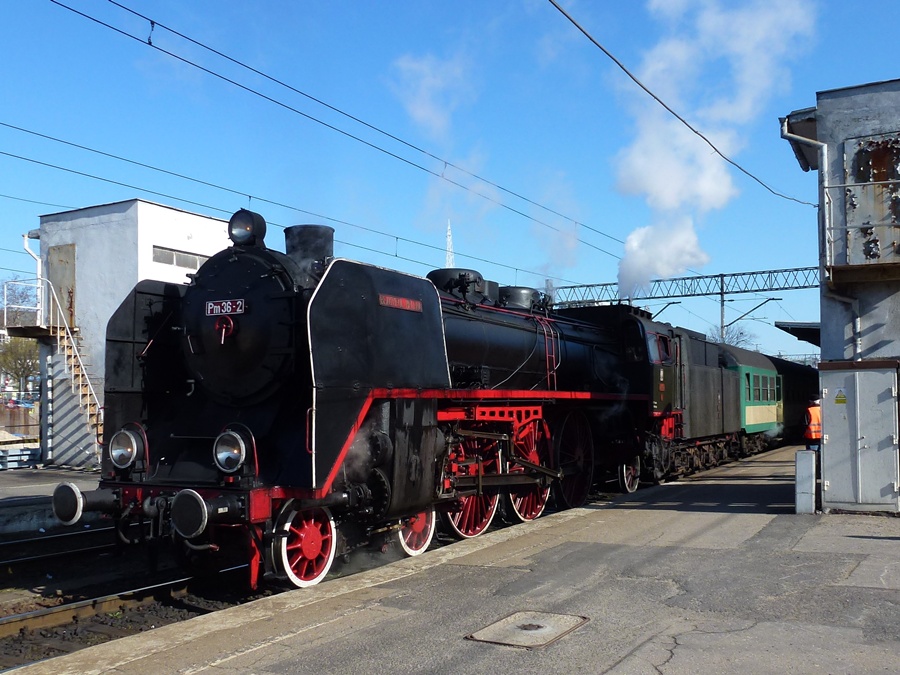
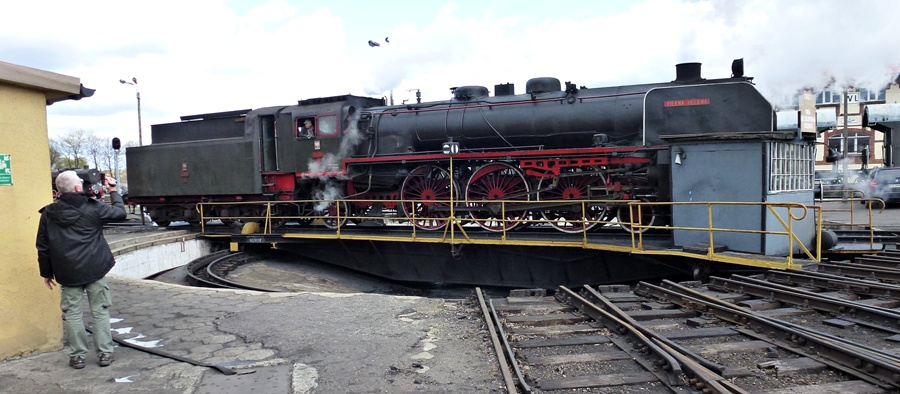
Tucked into the quiet countryside of western Poland, the Wolsztyn Steam Depot has somehow defied the march of time. Here, amid the hissing of valves and the rhythmic chuff of pistons, locomotives like Pt47‑65 and Pm36‑2 “Piękna Helena” still burn coal and boil water to move people—not just nostalgia.

It’s a miracle of engineering and passion.

Founded in the early 20th century, the depot is still a working roundhouse—a fully functioning railway yard and an unlikely stronghold of steam in a world run on diesel, wires, and digital schedules. And yet, its future is as fragile as the thin steel of a firebox wall.

In 2023, the passing of longtime supporter Howard Jones MBE dealt a heavy blow. His initiative, the Wolsztyn Experience, had kept the depot alive through international support, training programs, and a steady stream of tourists. When it folded, the steam runs stopped—temporarily.

By September of that year, a local group of dedicated Polish railway workers managed to bring back daily steam service. Today, a single weekday route from Wolsztyn to Zbąszynek, and a longer Saturday trip to Poznań, keep the fire burning. But just barely.

Tourism has yet to recover. Many local businesses report steep declines, especially those that once thrived on the visits of railfans like me. And the locomotives themselves are aging. Pt47‑65, the depot’s current workhorse, is due for maintenance in August 2025. Unless Ol49‑59, currently undergoing overhaul, returns in time, steam operations could face another pause.

There is, however, a flicker of hope. In May 2025, the depot received its own operating certificate, granting it new autonomy and showing that some institutions still believe in what this place stands for.

But why does it matter? Why keep steam alive when everything else runs faster, cleaner, cheaper?

Because steam is more than machinery. It’s a heartbeat. A testament to human effort, sweat, precision, and pride. In a world rapidly digitizing and disconnecting us from the tactile, from the physical, Wolsztyn offers something profoundly real.

It reminds us of a time when the journey mattered. When machines had personality, and the people who ran them had blackened hands and fiery eyes.

I haven’t been yet—but I hope to go soon. Before it's gone. Before the last chuff fades and the depot goes silent. Wolsztyn is the last place on this planet where steam still serves the people, not just the past. And I want to stand on that platform, feel the heat of the boiler, smell the coal smoke, and ride history while it still moves.


.
.
Dongo
Full Member
Joined: May 2024
#17 25 Jul 2025 at 1:26 PM 44 views
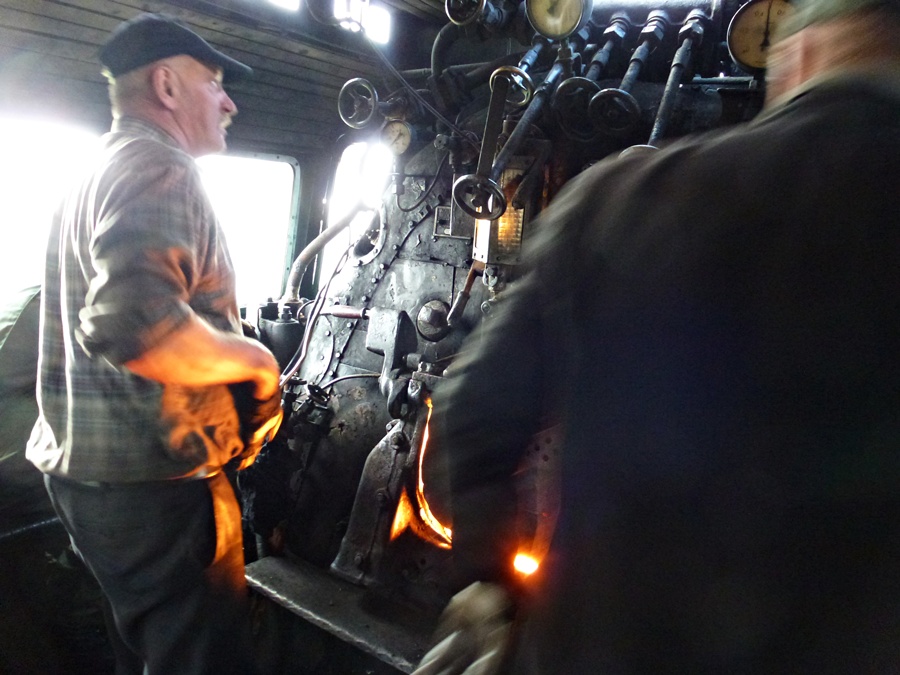
I did the round trip from Poznan to Wolsztyn on 18th April 2012. It was a fantastic experience. At an extra cost we were permitted to travel on the footplate for three stops. In addition to the driver and fireman there were two enthusiasts who were doing the full experience of shadowing the driver and fireman for the week. We boarded through the cabbed tender and the cab was absolutely enormous. It took two of them to open the regulator which was pegged into position and all of the driving was done on the cut-off. The driver was more interested in selling us PKP caps! At one station there was a pretty girl waiting on the other platform so the whistle was tooted! Please enjoy the photos.

Hanna
forum moderator
Joined: Jun 2024
Lives with
Pexter
Pexter
#18 25 Jul 2025 at 3:45 PM 44 views
Dongo said:
I did the round trip from Poznan to Wolsztyn on 18th April 2012. It was a fantastic experience. At an extra cost we were permitted to travel on the footplate for three stops. In addition to the driver and fireman there were two enthusiasts who were doing the full experience of shadowing the driver and fireman for the week. We boarded through the cabbed tender and the cab was absolutely eno...
Fantastic photos!
Lady-J
admin
Joined: Apr 2023
#19 25 Jul 2025 at 4:23 PM 44 views
If you all want a high speed train, my Dollywood Express runs most weekends, Lady-J (y)

👁 Reply Preview
Loading preview…

Please log in to join the conversation

Log In

Manage Thread Tags

×

Current Tags:

Add Tags:

Reactions

×