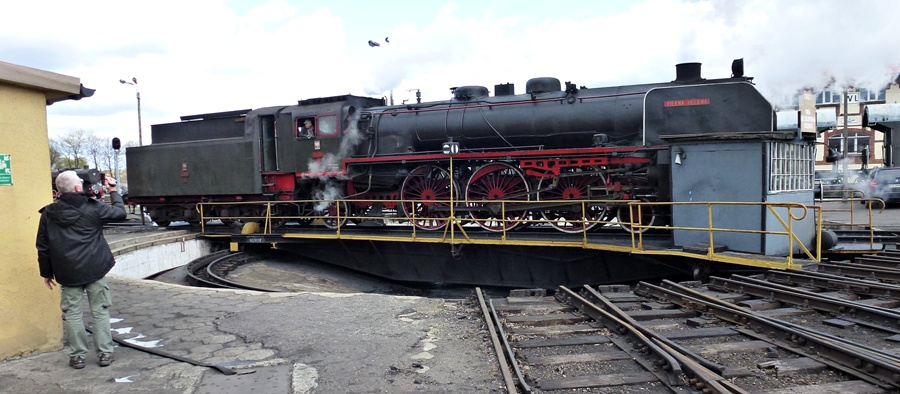
Hello Hanna,
You have great knowledge 🙏
I remember thinking, why didn't we do high-speed rail like the French. Then we had the disaster of HS2. 10 years in the making so far, projected cost of £100 billion, and we still don't have a high-speed train that does the paltry 100 or so miles from London to Birmingham 😆 (and will only save 30 minutes on the journey.)
Thank you. But it is no me, I steal these writing from my BFF who is a long time advocate for expanded passenger rail in the US
But if it is any consolation, it is much worse in the US than any other first world country, allegedly the richest country in the world.
Why High-Speed Rail Fails in the U.S.—And Why the Excuses Don't Hold Track
America loves the idea of high-speed rail in theory. Slick trains, zipping across scenic landscapes, connecting city to city with smooth, quiet efficiency—it’s a vision we borrow freely from France, Japan, Spain, and now even Morocco and China. But in reality, the U.S. is home to some of the slowest “high-speed” rail in the developed world, with decades of broken promises, stalled projects, and outright abandonment. California’s bullet train? Mired in delays and lawsuits. The Texas line? Still a whisper. The Northeast Corridor? Barely faster than it was 40 years ago.
So why has high-speed rail failed in the United States?
Ask most officials or talking heads, and the answer comes dressed in inevitability:
“The U.S. is just too big. It works in Japan because cities are close together. Europe is denser. We’re spread out. Trains don’t make sense here.”
But this excuse is misleading—and dangerously so.
Yes, the U.S. has vast land and distant cities. But that should make high-speed rail easier to build, not harder. The argument that our “sprawl” makes rail impractical ignores one massive logistical truth: the more open the land, the cheaper and faster it is to lay track. Buying right-of-way in rural Texas, Nevada, or Colorado is far less expensive than threading a rail line through suburban France or urban Tokyo. If you’re going to build long, straight, high-speed infrastructure, wide open space is an advantage, not a flaw.
The real issue is not geography. It’s policy.
For nearly a century, America has poured its money into highways and airports. The FAA, the interstate highway system, air traffic control, terminal expansions, subsidies for regional airlines, fuel tax breaks, every corner of air and car travel is coated in layers of federal and state support. Meanwhile, passenger rail outside of the northeast corridor, has been left to rot.
If we were to divide transportation funding evenly, say, 50/50 between air and rail, we could build a high-speed network that links major population centers within 100–500 miles of each other:
- Dallas to Houston
- Chicago to St. Louis
- Atlanta to Charlotte
- San Diego to Las Vegas
- Seattle to Portland
- Orlando to Miami
These are not transcontinental journeys. They are medium-range distances where high-speed trains are proven to outcompete air travel in time, convenience, and sustainability. In countries with functioning rail networks, these are precisely the routes where trains dominate. Why? Because once you factor in airport transfers, security lines, and tarmac delays, a three-hour train ride downtown to downtown is simply more efficient than flying.
Yet in the U.S., we continue to prop up short-distance air travel, often with public money, while pretending that high-speed rail is too expensive to try. The irony is staggering. The federal government spends billions to keep small regional airports afloat. It pays to keep flights running between midsized cities that a train could connect more cleanly, more cheaply, and with far less carbon. But trains are expected to “pay for themselves,” while airlines are treated as national necessities. That’s not economics. That’s politics.
And then there’s the fragmentation. No national rail-building strategy. No single regulatory body with the power to push high-speed infrastructure across state lines. Every project becomes a patchwork of local resistance, NIMBY lawsuits, environmental review delays, and political sabotage. No airline has to deal with this level of friction when building a runway.
The U.S. has the engineering know-how, the ridership potential, and the climate incentive to build high-speed rail. What it lacks is the will—and the courage to stop subsidizing one mode of transport while starving another. It’s not that we can’t afford high-speed rail. It’s that we already paid for something else—and refuse to rethink the budget.
So if you’re told high-speed rail can’t work in America because “we’re too big,” push back. We’re not too big. We’re too invested in the past. The failure of high-speed rail in the U.S. isn’t a problem of geography. It’s a problem of imagination—and one we still have time to fix.
Because someday, we’ll look back at this moment and ask why we didn’t build the tracks when the land was still wide open.
But thank for posting the about APT in the first place. Yesterday's post relates doll ownership to the paradigm shift on marijuana. I never know for day to day what relates. To gave me todays parallel. Thank you, all other train lovers, for having trains on this forum. It shows the public that many of us have common interests other than dolls.
Lessons Learned from Stories
https://www.mylovedoll.uk/threads/the-truths-un-truths-about-doll-ownership.2059/interstspage-3#post-40534
-- Hanna --